Photograph Luang Prabang and the Wat Phou Champassak festival
Laos is the sort of country that really gets under your skin. Although it draws far fewer crowds than its more well-known neighbours, it arguably offers the most unspoilt Southeast Asian experience, and the warmest, most welcoming people you will ever encounter.
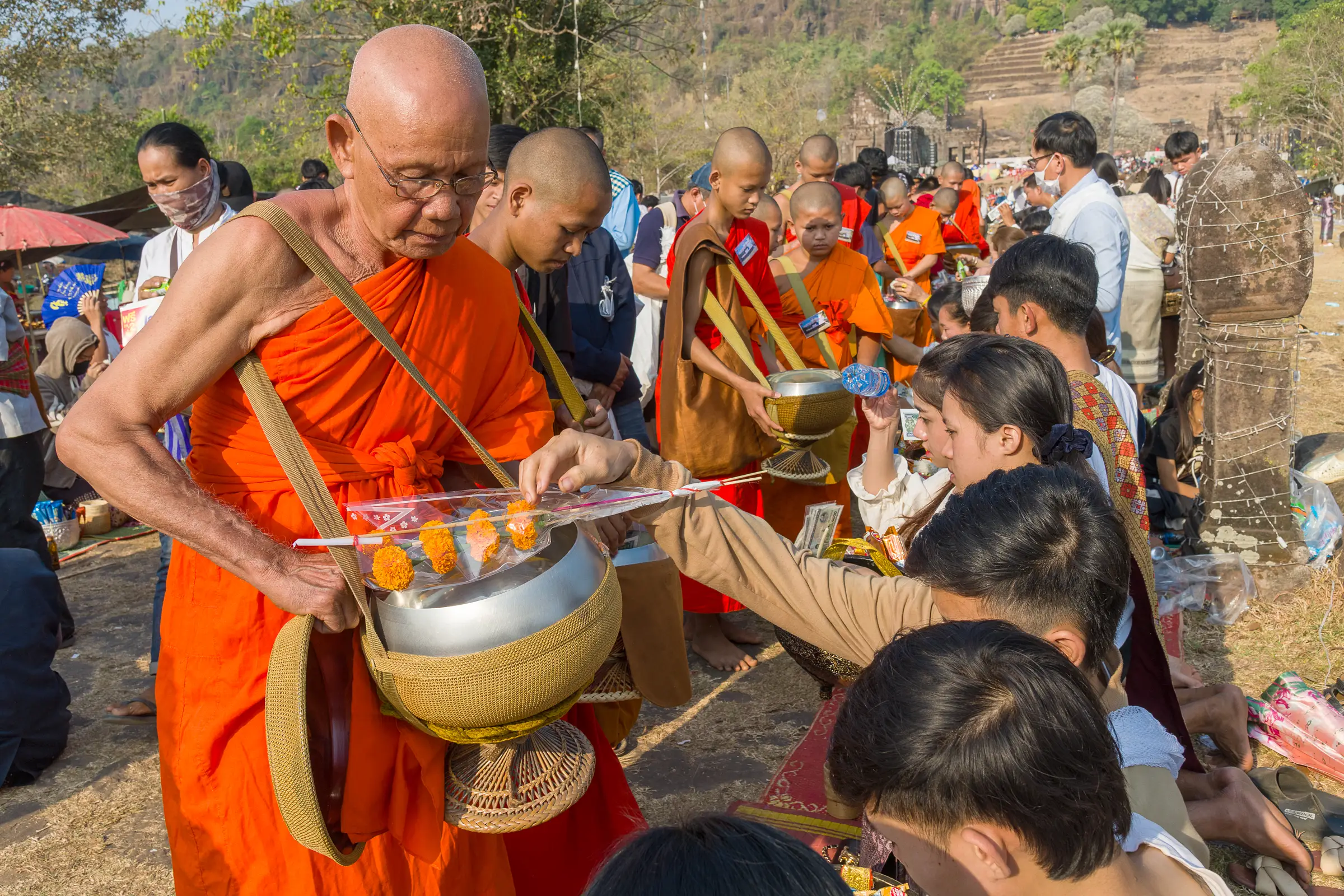
This adventurous journey is timed for us to witness the Wat Phu Champassak Festival which draws huge crowds of locals who line the main causeway of the atmospherically ancient Khmer Ruins to give alms to long lines of monks at sunrise. This ritual happens every morning, all over Asia but on this day it is particularly auspicious to give to monks, and this festival is a unique thing to experience. As well as coming for a religious pilgrimage, the people enteretain themselves at a large fairground.
I have travelled to Laos on countless occasions and have created an itinerary which takes in the unmissable highlights. It will also include extensive photography support from professional travel photographer, Steve Davey, countless photo opportunities and the company of fellow photography enthusiasts.
Our journey will start in the Southern city of Pakse, which is now easily reachable with a number of International connections. We start in the South of the country to fit with the festival, but also because once you have seen the city of Luang Prabang - where we finish our trip - you simply won't want to leave.
After time to explore the city, including the vast and incredibly photogenic market, we will head South to the inland delta of the River Mekong, the hyperbolically named Si Phan Don, or ten thousand islands
This is a relaxed and rural area, with a couple of photogenic waterfalls which historically blocked river transport up and down the river. French colonials reacted to this obstruction by building a railway across one of the islands.
Starting our long journey North we will experience the traditional religious festival at Wat Phu Champassak, where lines of monks in traditional orange robes collect alms from pilgrims amidst the ruins of an ancient ruined temple that used to be a part of the Khmer empire which was centred in Angkor Wat in Cambodia.
We return to Pakse to fly to the capital city of Vientiane. This city has grown and developed over the years, but it is still one of the most laid back capital cities you will ever visit.
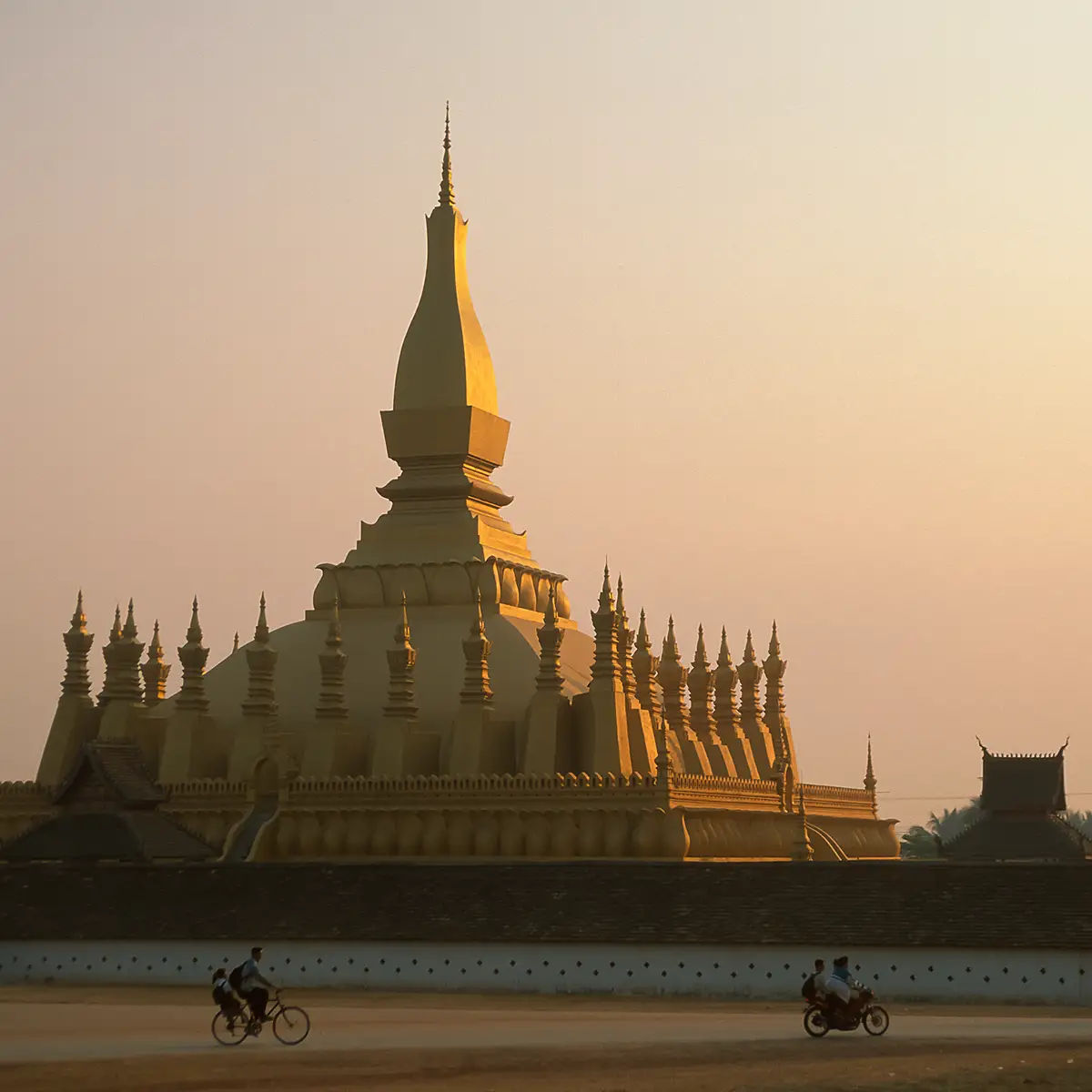
Two of the most unique monuments in the city are the golden Wat That Luang monastery and the Patuxai monument which was based on the Arc de Triomphe and was reputedly made with cement that was intended for a new runway during the American War in Indochina.
Laos was the most bombed country in history during the so called Vietnam War and the next region, the Xieng Khuang plateau around the town of Phonsavan was one of the most bombed regions.
Phonsavan is home to one of the most most enigmatic and mysterious places in Asia - the sprawling Plain of Jars, a series of megalithic carved stone jars - the largest of which is over 14 tons.
The original purpose of these jars has been lost to history, but the largest Site 1 still bears the scars of more recent history, when battles were fought amidst the jars, leaving immense bomb craters.
We will also head out into the rural area around Phonsavan, where some villages still make use of war scrap for fences and even planters.
The North of Laos is home to many hilltribes, and next we will travel to explore the stunning scenery around the town of Oudomxay, home to 14 different ethnic groups.
We will head off on a 4WD safari to a number of different villages to meet and photograph some of the different people who live in the region.
Our final destination is the undisputed highlight of the whole country and the whole itinerary. The city of Luang Prabang - the former capital of Laos until 1975, when it was moved to Vientiane.
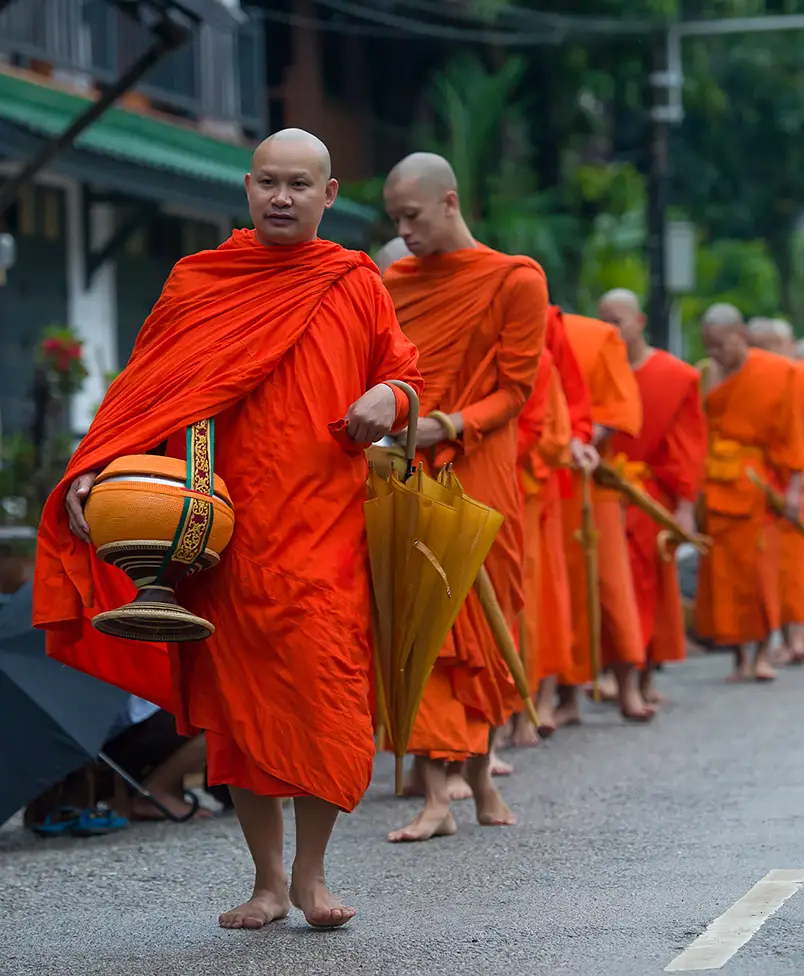
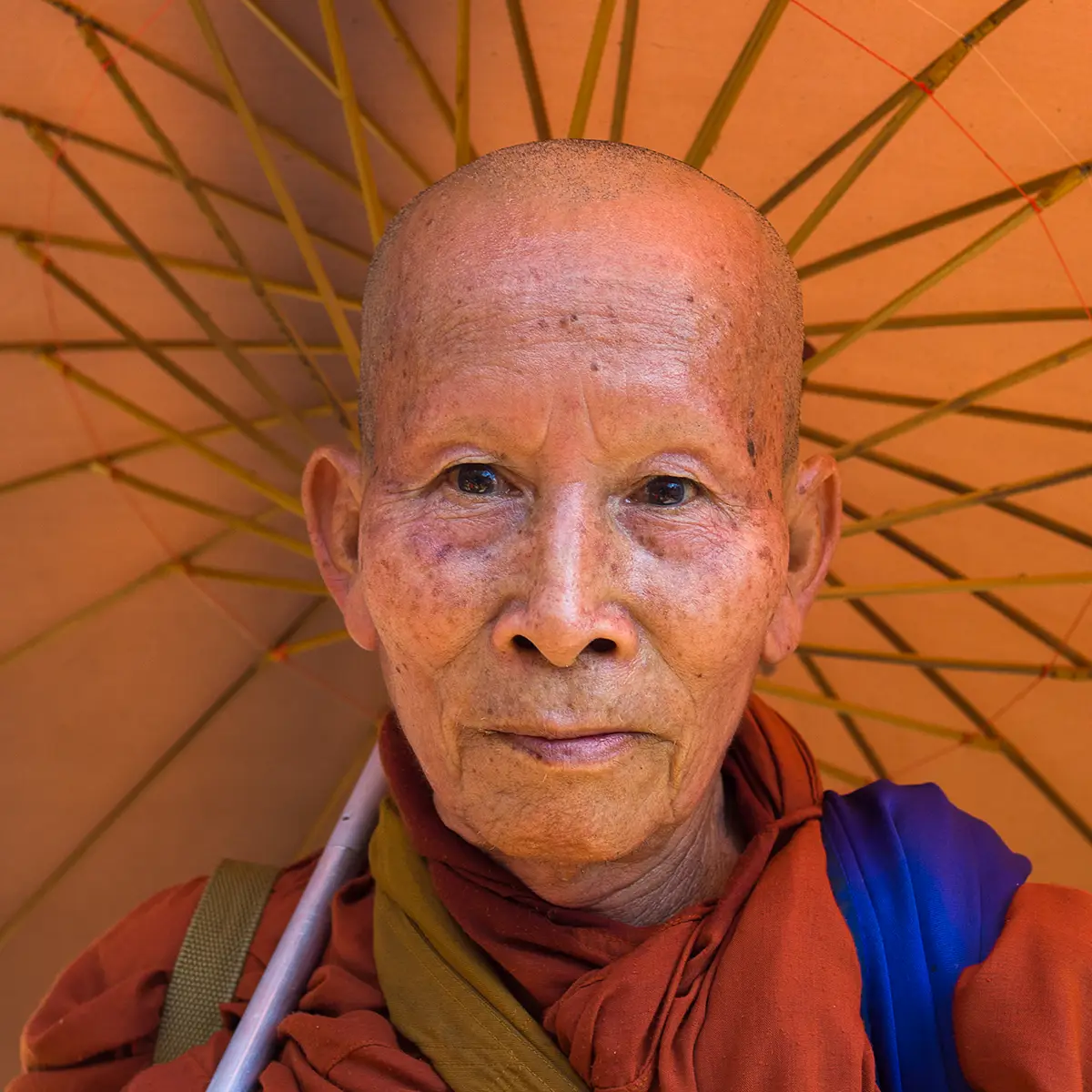
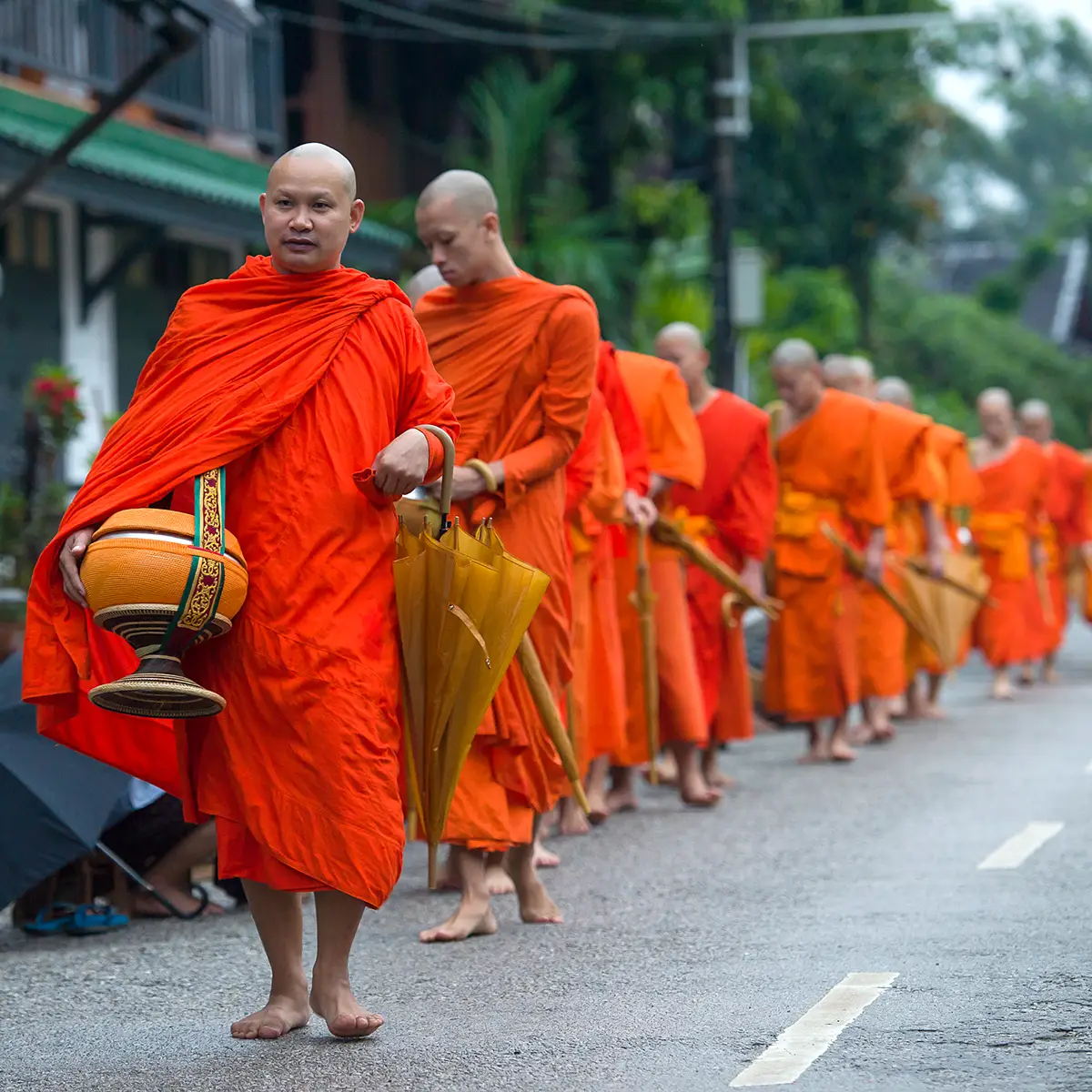
Relaxed and traditional, this is a city of monasteries and of monks. Every morning hundreds of monks process around the town receiving alms from the faithful in a ritual called Tak Bat.
In Luang Prabang we will also visit the stunning Kuang Si waterfalls and the Pak Ou caves, where retired Buddha statues are pensioned off in an atmospheric cave overlooking the Mekong.
Our trip finishes in Luang Prabang to give you the opportunity to spend a few more days in this most relaxing and entrancing of towns.
Why I think our Laos photo tour is unmissable
Laos is one of my most favourite countries. I have visited many times over the past 30 or so years, and have explored the country from top to bottom. Even though it has developed over this period, it still retains a unique atmosphere in South East Asia, managing to combine a relaxed atmosphere with a deeply rooted Buddhist culture.
The highlight of any trip to Laos is the UNESCO recognised town of Luang Prabang in the north, which served as the capital of the powerful Lan Xang Kingdom and the former royal capital of Laos until 1975. The Lan Xang Kingdom encompassed much of Northern Tailand, and there are distinct links in the food and also the language.
Luang Prabang is an incredible city – remarkably unspoilt for such a popular tourist destination. There are 33 Wats, or monasteries here, and they all have large population of resident monks. Every morning, the monks head out on the traditional tak bat, or morning alms round. This happens all over Laos, but the numbers in Laos are greater than anywhere else in the county.
I have photographed this entrancing ritual for for the past 30 or so years, and will be able to advise you where to stand to avoid the crowds and how to get fantastic photographs without causing offence to the monks.
There is more to Laos than Luang Prabang though, and one of the highlights on this trip is the Wat Phou Champassak Festival in the ancient Khmer ruins in the South of the Country. Without doubt one of the most entrancing festivals in the county, it retains much rural and religious charm; something that has been lost in the other main Laos festival: the That Luang Festival in the capital Vientiane.
Another great highlight for me is the wonderfully enigmatic Plain of Jars. This incomparable collection of ancient stone jars litters the plains of the North East Xieng Khouang Province. Believed by some to be fermenters for celebratory alcohol or funeral urns, they can be found in one of the most bombed regions of the country. In the past, all of the villages here were littered with UXO and bomb scrap was used for everything from building supports, fences, plant pots and animal feed troughs. I can still take you to villages where you can see how the resourceful locals have turned being the most bombed country in history into a unique resource.
Laotian food is a major attraction to visiting this country: the most iconic food has to be the ubiquitous sticky rice or khao niew, which is eaten by hand and usually served in a woven bamboo basket. Other great dishes to consider are the spicy Laab ground meat salads and the Laos Feu, which is the local version of the Vietnamese Pho noodle soup. In Laos this comes as a simple noodle broth, with a vast amount of 'toppings' like fresh cilantro, green onions, crispy fried garlic, bean sprouts, and a squeeze of lime, which are added by the customer, along with sauces and chilli.
If you are not a fan of Asian food then the French Colonial influence means that stuffed baguettes can usually be found, such as the Khao jee pâté, a baguette with pate and salad. There are many vegetarian options thorough the country too, so most food preferences can be accommodated.
This is without touching on the great coffee - best served local style over a dollop of sweet condensed milk - and of course the world-beating Beer Lao, which now comes in a range of eclectic styles, including Dark Stout, IPA and wheat beer, as well as the original rice recipe. Finally, you also have to try the local Lao Lao rice wine, which also often comes in an eclectic selection of styles, with various things steeped in it.
The real beauty of Laos though is not the unparalleled things that there are to see and witness, but more the atmosphere of the place and the people who live there.It truly is a place to experience and engage with, and is somewhere that will get under your skin and keep dragging you back.
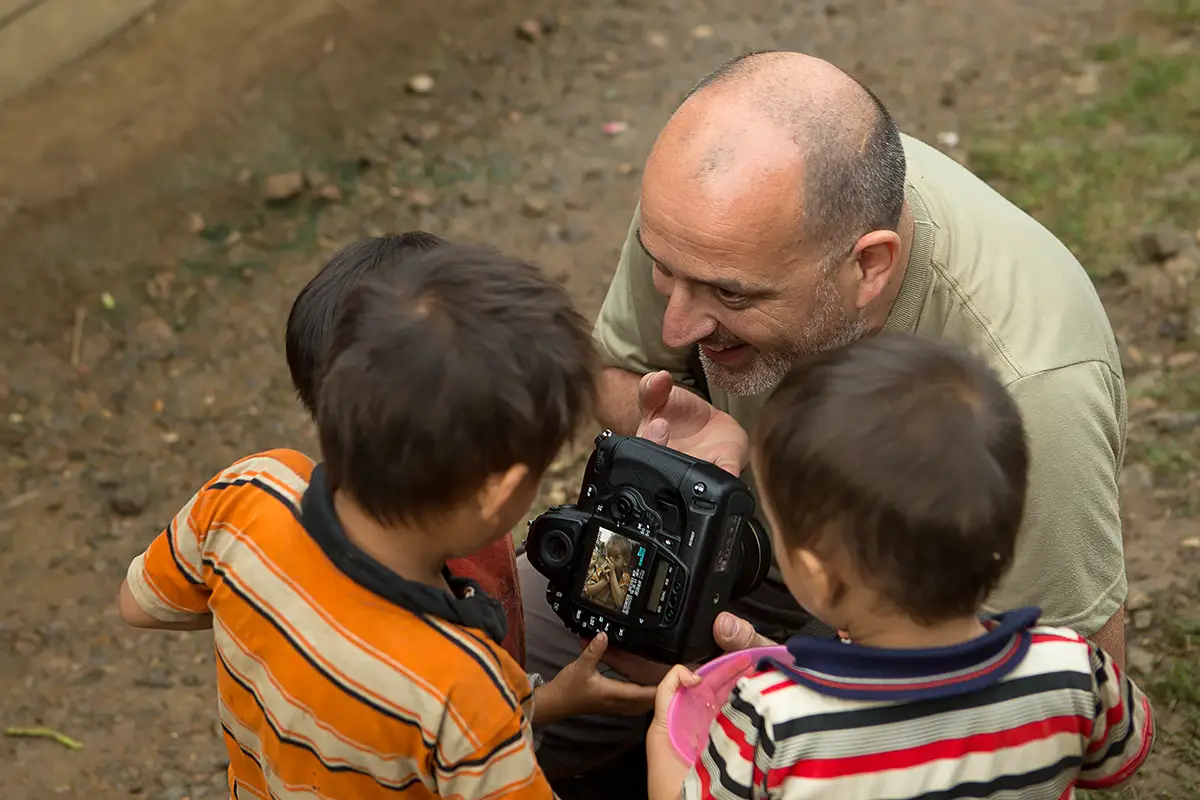
The Laotian people too will provide many incredible memories and stunning photographs. One characteristic from all over the country is warmth and a curious welcome. It is a place that responds to quiet and friendly engagement, and I will be able to give you a number of pointers in how best to approach people.
I hope that you decide to join me on this unique photographic exploration of this forgotten corner of South East Asia.
Steve Davey
Photography opportunities
There are a many wonderful things that you will be able to experience and photograph on this trip. We have created a unique itinerary to give you as many real, and organic photo-opportunities as we can fit into our time away. We are also able to include pretty much anything that you find interesting as drive along: whether it is local people working in fields or even water buffalos
Some of the photographic opportunities you will enjoy on this trip include:
- Daoheuang Market, Pakse - Bustling main produce market
- Ban Ta Oy village, Pakse - Traditional smiths using diffused shells as anvils
- Wat Tomo, Champassak - Ancient Khmer ruins set in dense jungle
- Mekong River Sunrise, Si Phan Don - Sunrise over Mekong and islands
- Tak Bat, Si Phan Don - Monks morning Alms Round
- Don Khon Island, Si Phan Don - Traditional island with colonial era bridge
- Palm Sugar Village, Si Phan Don - Village that refines palm sugar
- Li Phi Waterfall, Si Phan Don - Waterfall on Mekong River
- Khone Pha Phen, Si Phan Don - Series of cataracts on Mekong River
- Ban Nong Buk village - Traditional woodcraft village
- Don Daeng island village - Boat trip to traditional island village
- Wat Phou Festival, Champassak - Afternoon/night visit to festival ground
- Wat Phou Festival, Champassak - Sunrise Monks Alms Round
- That Luang Stupa at sunrise, Vientiane - National gold coloured stupa
- Arc de Triomphe Patuxay, Vientiane - Arch shaped wartime monument
- Wat Sisaket, Vientiane - Monastery with hundreds of Buddha images
- Ho Phrakeo Museum, Vientiane - Buddhist Museum in ancient temple
- Plain of Jars, sites 1 & 2, Phonsavan - Enigmatic stone jars & bomb craters
- Phonsavan Morning Market - Atmospheric produce market
- That Foun Stupa, Muang Khoun - 16th century brick stupa with war damage
- Wat Phia Wat, Muang Khoun - ancient temple with war-scarred Buddha
- Ban Tajok, Phonsavan - Ethnic villages showing bomb scrap
- Phou Khoun - Local market surrounded by Hmong villages
- Oudomxay - Mountains and jungle scenery
- Oudomxay - Tribal village visits and portraits
- Tak Bat, Luang Prabang - Monks morning alms rounds
- Morning Market, Luang Prabang - Local produce market
- Pak Ou Caves, Luang Prabang - Ancient caves with old Buddha statues
- Ban Sang Hai, Luang Prabang - Lao Lao (Rice wine) village
- Mekong River, Luang Prabang - Boat trip down the river
- Mandalao, Luang Prabang - Ethical elephant rescue sanctuary
- Wat Xieng Thong, Luang Prabang - Holiest temple, from 1560
- Royal Palace Museum, Luang Prabang - Old palace of King Sisavang Vong
- Mount Phousi, Luang Prabang - Sunrise from Hill with Temple on top
- Kuang Si Waterfall, Luang Prabang - Turquoise waterfall with many pools
- Ban Na Oane, Luang Prabang - Hmong crafts village
- Tat Kuang Si Bear Rescue Centre, Luang Prabang - Moon Bear sanctuary
- Street scenes, Luang Prabang - French architecture, alleys and monasteries
Impressions of Laos photography tour
- full details
Below you can find all of the details about Steve Davey, who has organised and will be leading this tour, Intrepid Travel, who will be handling the land arrangements and bookings, as well as the full price information, dates and what is included in the trip price; and the full itinerary.
Impressions of Laos
18 February to 4 March 2027
Places left: 5*
*Includes held places
Min 8, max 12 people
Variable price from:
8 pax £3645 pp
9 pax £3545 pp
10 pax £3495 pp
11 pax £3395 pp
12 pax £3345 pp
excl. flights, based on roomshare
Price is variable depending on the number of people booked on the trip. You should be prepared to pay the 8 person price; refunds will be processed once the final numbers are confirmed.
Optional single supplement: £695
Although you can opt for a roomshare place, and we will do our best to find someone for you to share with, if this is not possible and you have to have a room to yourself, then unfortunately the single supplement will be payable.
Included in the trip price
- 14 nights hotel accommodation
- 14 breakfasts, 1 lunch & 2 dinners
- Group arrival transfer
- Flight from Pakse to Vientiane
- Flight from Vientiane to Phonsavan
- High speed train to Oudomxay
- Pakse - Morning market visit
- Boloven Plateau - Visit to Smith village
- Wat Tomo (Oum Moung Temple) visit
- Si Phan Don - Palm sugar village visit
- Si Phan Don - Mekong River boat trip
- Si Phan Don - Li Phi waterfall entrance
- Si Phan Don - Khone Pha Pheng entrance
- Si Phan Don - Ban Nong Buk village visit
- Champassak - Orientation Walk
- Champassak - Boat trip to Don Daeng
- Champassak - Afternoon visit to Wat Phou
- Champassak - Morning Wat Phou festival
- Vientiane - Pha That Luang sunrise visit
- Vientiane - Pha That Luang entrance
- Vientiane - Patuxay entrance
- Vientiane - Wat Sisaket temple entrance
- Vientiane - Ho Phrakeo Museum entrance
- Phonsavan - Plain of Jars Site 1 & 2 visits
- Muang Khoun - That Fun Stupa and Wat Phia Wat Temple visits
- Muang Khoun - Ban Na Ou and Ban Napia village visits
- Phonsavan - 'War scrap' village visit
- Oudomxay - tribal village visits
- Luang Prabang - Pak Ou Caves visit
- Luang Prabang - Mekong Boat Trip
- Luang Prabang - Ban Sang Hai Village visit
- Luang Prabang - Mandalao elephant visit
- Luang Prabang - Kuang Si Waterfall Visit
- Luang Prabang - Ban Na Oane Village visit
- Luang Prabang - Monks alms round visits
- All transport as per itinerary
- English Speaking leader
- Entrance fees as per itinerary
- Expert photographic support
Not included in the trip price
The following things are not included in the trip price:
- International Flights
- Any visas required
- Services not mentioned in the itinerary
- Late check out at hotels
- Meals/drinks not mentioned in the itinerary
- Drinks with included lunches and dinners
- Tips for leaders, guides and drivers
- Expenditure of personal nature
- Personal Insurance
- Optional activities
Although international flights aren't included in the trip price, you can opt to have Intrepid Travel buy these for you which gives you a greater level of industry protection, and if your journey starts and finishes in the UK the trip can be covered by an ATOL certificate.
Laos Photo Tour - Full Tour Itinerary
The full itinerary of our unique travel photography tour to Laos, and the entrancing town of Luang Prabang, the mysterious Plain of Jars and the ancient Wat Phu Champassak Festival, with land arrangements and comprehensive travel industry ATOL protection by Intrepid Travel; led by professional photographer, Steve Davey.
Sabai dee! Welcome to the South of Laos and Pakse, the capital of southern Laos where the majestic Mekong and Xe Don rivers meet. Pakse means ‘mouth of the river’ as it is the exact place where the Xe Don River flows into the Mekong and the city itself is a base for travellers who would like to explore the South of this entrancing country.
Today upon arrival, we will take the group airport transfer to our hotel and be ready for a welcome brief meeting at 6 pm. After the meeting we can all head out for an Welcome dinner, and the first of many refreshing Beer Lao - one of the best beers in the World!
Arrival transfer:
Included on Group flight basis only
Accommodation: Champassak Grand superior or similar
Meals included: Welcome dinner
After breakfast we will have a visit to the bustling Daoheuang morning market, where all manner of local produce is sold by friendly stallholders. You can also pick up a local Laotian Noodle Soup and the food quarter of the market.
Once we are finished in the market, we will then drive about 30 minutes towards the foot of the Boloven Plateau, a region which is home to Mon- Khmer Ethnic Groups including Alack, Laven, Ta Oy, Suay and Katu. We wall make a visit to a Smith village which has the quirk of using diffused US howitzers shells as anvils!
We will the head south along Route 13 for 130 kilometres until we reach Si Phan Don. Along the way we will detour to visit the ancient ruins of Wat Tomo (Oum Moung Temple). Atmospherically set in heavy forest, these 9th-century Khmer ruins are connected to Wat Phou, which lies on the other side of the river at Champassak. They were both constructed during the expansion of the Khmer Empire, which was based at Angkor Wat in Cambodia.
Si Phan Don a vast inland delta of the Mekong River, which is Lao means 4000 Islands. We will be staying on Don Khnog, the main island, are are intending to arrive in time to photograph the sunset over the Mekong River as a number of small fishing boats cast their nets.
Our hotel is right on the riverside, and so we can photograph the sunset from the hotel's decked restaurant whilst enjoying a sundowner before dinner.
Included activities:
• Pakse - Morning market visit
• Boloven Plateau - Visit to Smith village
• Wat Tomo (Oum Moung Temple) visit
Accommodation: Senesothxuene Hotel – Superior River View or similar
Meals included: Breakfast
Early morning you can walk just out of our hotel to photograph the sunrise, and the monks performing the Tak Bat, which a ritual that happens all over South East Asia. This is where monks collect alms of food from the faithful in their characteristic monks bowls. The monks here are not in the huge numbers that you will see in the North of the country, but they do stop to chant prayers after receiving the donations. You will also be able to photograph the monks in the warm sunrise light.
After breakfast at the hotel, we will head out to explore the history, culture and landscapes of the area. Firstly we will visit a traditional which harvests and refines sugar from palm trees. This involves shinnying up a palm tree to collect the sap (toddy) and then boiling it to refine it.
Next we will take a boat trip down the Mekong River for around one hour, exploring the beautiful views and photographing the life that we find on the river, until we reach Don Det island. This is the start of a unique narrow gauge railway which was built by the French in 1893 at the start of the colonial era. All of the Mekong was navigable, except for the raging waterfalls of Si Phan Don, and so the French built a railway from the top of Don Det all the way down to the bottom of Don Khon island. At each end vast gantries were built to load smaller boats and freight on and off the railway.
We will walk along the former path of the railway until we cross the rather incongruously striking stone bridge between Don Det and Don Khon, which is surrounded by a number of pleasant restaurants. We will take some time here to explore the village and the nearby temple as well as the rusting locomotive which left over from when the railway closed in 1940. We will have time to have some lunch before and also to have some lunch, before we head off to photograph the Li Phi waterfalls.
Don Khone used to be a good place to catch a boat to try to view the rare Mekong River Dolphin in the waters that border Cambodia, but sadly the dolphins have been extinct in Laos since 2022.
The Li Phi waterfalls are a series of cataracts cutting though jagged dark rocks. If we are lucky we will be able to see local fishermen casting their nets into the waters.
Next we will take a boat to Ban Nakasang where we will pick up our transport to drive to the largest of all of the waterfalls in the country, the mighty Khone Pha Pheng, near to the border with Cambodia. This is the perfect waterfall to shoot with a tripod and a slow exposure - something that we can cover technically, before we head back to our hotel.
Included activities:
• Si Phan Don - Palm sugar village visit
• Si Phan Don - Mekong River boat trip
• Si Phan Don - Li Phi waterfall visit
• Si Phan Don - Khone Pha Pheng visit
Accommodation: Senesothxuene Hotel – Superior River View or similar
Meals included: Breakfast
This morning we will have another opportunity to photograph the monks on their Tak Bat morning alms round. After breakfast we will start our journey north towards Champassak.
On the way we will visit the wood handicrafts village of Ban Nong Buk, before crossing the Mekong River on an atmospheric local ferry to Champassak, where we should have time to walk around and explore this quiet and quaint town. The variable will be how long the journey, and the wait for the ferry takes. There may well be considerable traffic heading to the festival, and so the timings and the options for the afternoon will have to depend on how long this takes.
Again, depending on times we have the opportunity to catch a traditional boat along the Mekong for an hour to visit the visit Don Daeng island village and enjoy a cup of coffee or a Beer Lao at La Folie hotel .
Although the main event and the monks processions will be tomorrow morning, there will be considerable numbers of pilgrims praying in the ancient ruins of Wat Phu Champassak this afternoon, and I am aiming to head there for around 3pm until just after sunset. This will allow plenty of time to climb up the many stairs to the temples on the top of the hill that the site is built into. Along with the pilgrims, there will be monks and even Buddhist nuns offering blessings. It is incredibly photogenic and an amazing thing to experience and completely different to what we will see tomorrow morning.
On the outskirts of the festival, there will be a number of stalls selling all sorts of things - from fashion to plastic toys, as well as a variety of food. There will also be various fairground attractions, and a lot of amplified Thai pop music. It is generally quite fun, and worth a quick look, but we will have quite an early start in the morning for the main event.
Included activities:
• Si Phan Don – Ban Nong Buk village visit
• Champassak – Orientation Walk (if time permits)
• Champassak – Boat trip to Don Daeng Island village (if time permits)
• Champassak – Afternoon visit to Wat Phu festival
Accommodation: The River Resort or similar
Meals included: Breakfast
Today will be an early start, as the monks start the Tak Bat alms round at the Wat Phu Festival around 6:30am, and there will be a fair bit to photograph before then. We will aim to get to Wat Phou around 6:00am. Even this early, there will be many people lining the long causeway leading to the main site, ready to give their donations.
There will be time to walk around and take various portraits of the pilgrims and the monks before we will have to get in place for the alms round. This being Laos though, all timings will be somewhat approximate, and we will have to be flexible and responsive. I will be on hand to give everyone pointers on where to stand and how to behave.
There will be various groups of monks, and they will take turns to walks down the long causeway, receiving donations from the faithful who will line both sides. Unlike the daily alms round, the monks will also receive donations of sweets, chocolate and cash. In fact, they will have so much given to them that they will have helpers walking with them with sacks for them to empty their bowls into.
In total, there should be hundreds of monks walking the line at different times, and thousands of locals giving them donations. It is a breath-taking thing to witness, and very photogenic.
Once we have finished at the festival, we will head back to our hotel for a late breakfast, before driving to Pakse for our afternoon flight to Vientiane. Upon arrival , we will transfer to our centrally located hotel for a well deserved rest. Depending on the time, we will also have the chance to walk down to the river area to see the thriving night market, before heading out for dinner.
Included activities:
• Champassak – Early visit to Wa Phou festival
• Flight from Pakse to Vientiane
Accommodation: Salana Boutique Hotel – Deluxe Room or similar
Meals included: Breakfast
Early morning, we will head to take photographs of the That Luang Stupa at sunrise. This golden monument dates back to the 16th Century and is surrounded by a number of religious buildings. We will photograph this structure glowing in the golden light, before heading to the fAvenue Lane Xang to photograph the Patuxay Arc de Triumph, before returning to our hotel for breakfast.
The main monuments of Vientiane will open around 8:30am, so after breakfast we will head out to explore them properly.
Our first stop will be returning to the That Luang Stupa. Rebuilt in 1566 by King Setthathirath, it is the country's most sacred monument and a primary symbol of Lao sovereignty, featuring a 44 metre tall pyramid structure adorned with 500 kilos of gold leaf. We will also have the time to explore the monasteries which are adjacent to the stupa and a part of the religious complex.
Next we will head to Patuxay, and climb the monument for stunning views across Vientiane. Rumour has it that this Victory Monument was built from concrete donated to Laos by the USA during the Indochina War in order to build a new airport runway. Ironically, there would probably be a greater chance of an actual victory if the runway had been built.
After Patuxay, we will head to the Wat Sisaket temple, which is noted for its collection of over 2000 Buddha images. Some of these are tiny - others are more than life sized. The Wat was built in 1818 by King Anouvong as his private temple.
Across from Wat Sisaket lies the Ho Phrakeo (Haw Phra Kaew) Museum. Originally built in built in 1565 on the orders of King Setthathirath after he moved the capital from Luang Prabang to Vientiane, to house the Emerald Buddha figurine, which he had brought from Chiang Mai. The Emerald Buddha was kept here until 1779, when a Siamese General looted it back to Thonburi, where it was later installed in the Grand Palace in Bangkok.
Ho Phrakeo houses an eclectic museum of the most exquistive examples of Buddhist art, including Buddhas in all of the most significant poses that you will encounter in Laos. There is even one of the stone jars from the Plain of Jars here.
We will be seeing a lot today, but will also make time to just explore around Vientiane. We will aim to finish the day looking at the sunset over the River Mekong.
Included activities:
• Vientiane – Pha That Luang sunrise visit
• Vientiane – Pha That Luang entrance
• Vientiane – Patuxay entrance
• Vientiane – Wat Sisaket temple entrance
• Vientiane – Ho Phrakeo Museum entrance
Accommodation: Salana Boutique Hotel – Deluxe Room or similar
Meals included: Breakfast
Transfer to airport, flight to Phonsavan, the Plain of Jars – Domestic flight included in the package.
The Plain of Jars is a large area around Phonsavan where 300 huge stone jars of unknown origin scattered. The mysterious and ancient of over 300 huge stone jars apparently carved out of solid rock scattered around the plateau . The jars vary in size from 1 to 3.25 meters high and weigh up to six tons each and which are estimated around 2,500 to 3,000 years old.
There are different stories regarding the purposes of the jars. According to the local legend , King Kun Chuang had them constructed to store the wine for the celebration of his conquest of the province in the 6th century. Other people think that they were fueral jars for storing human remains.
Depending on the arrival time of our flight today we will either start exploring the Plain of Jars this afternoon, or we will head out tomorrow. Time permitting we will also visit the MAG UXO Visitor Information Centre, which tells the story of the detailing the "Secret War," the impact of unexploded ordnance (UXO) on daily life, and ongoing clearance efforts by the British Mines Advisory Group.
The so-call Secret War in Laos a massive, covert CIA-led paramilitary operation spanning from 1961 to 1973. To disrupt communist supply lines and stop the spread of communism into Southeast Asia, the CIA recruited, armed, and trained over 50,000 indigenous fighters. They also carpet bombed the country with some 300 million tons of bombs – many of which still litter parts of the countryside and are still causing death and destruction in remote parts of the affected provinces.
Site 1 of the Plain of Jars is the largest and has the most Jars, with around 300 megalithic stone jars scattered across a wide, open plain.
The landscape is dominated by a natural cave that early French archaeologist Madeleine Colani identified as a prehistoric crematorium due to the discovery of the remains of ash and burnt bones. The site is also littered with bomb craters from the carpet bombing that happened around the site and the battles between the Communist Pathet Lao forces and the army of the Royal Lao Army.
Included activities:
• Flight from Vientiane to Phonsavan
• Phonsavan - Plain of Jars Site 1 visit
Accommodation: Vasana Plain of Jars (standard room) or similar
Meals included: Breakfast
If we didn't manage to get to Site 1 yesterday afternoon, we will make an early visit to Site 1 of the Plain of Jars this morning. Then we will move on to explore Site 2, which is more Rural in atmosphere. It consists of around 90 megalithic jars split across two hillsides, and overlooking surrounding rice paddies.
We will then drive to Muang Khoun, the former capital of Xieng Khouang Province. This was completely destroyed during Indochina war. After 1975 the capital was moved to Phonsavan city.
Along the way, we will visit Ban Na Ou, a hamlet noted for its noodle production, and Ban Napia, a Phuan ethnic community which is known as the 'war spoon village' as the residents melt down aluminium war scrap to make spoons and handicrafts.
In Muang Khoun we will visit the ancient That Fun Stupa which was built between the 3rd and 4th centuries in order to store relics of the Buddha which were brought from India. This stupa was damaged in the 19th century by Chinese Haw Bandits who made a large hole in the structure which can still be seen. The stupa was also further damaged in the Indochina War.
The war also affected Wat Phia Wat Temple which dates to the 14th century, and is renowned for its war-scarred but enduring large seated Buddha statue, which features a missing eye and scars from Indochina War bombings
The resilience of the Lao people can be seen when we visit some of the so-called 'war scrap' villages of the Hmong and Yao ethnic groups. In these villages various diffused bombs and shells are used for construction and cluster bomb shell casings are used to make fences.
Included activities:
• Phonsavan - Plain of Jars Site 2 visit
• Muang Khoun - That Fun Stupa and Wat Phia Wat Temple visits
• Muang Khoun - Ban Na Ou and Ban Napia village visits
• Muang Khoun - 'War scrap' village visit
Accommodation: Vasana Plain of Jars (standard room) or similar
Meals included: Breakfast
Today we will have an early start for a long but stunning drive to Luang Prabang. Spanning rugged, twisty mountain roads, the trip is 305 kilometres, and should take approximately 7 hours depending on road conditions. We will be driving through spectacular highland scenery, passing remote stilted hill-tribe villages and climbing to sweeping 1200 metre heights.
About halfway is the dusty market town of Phou Koun, where we will stop for lunch, and to take some photographs of the local market, which often sports a somewhat eclectic selection of produce.
We are aiming to arrive at Luang Prabang in the late afternoon. This atmospheric World Heritage-listed city is a favourite of many travellers. Nestled in the hills of northern Laos on the confluence of the Mekong and Khan rivers, the city is claimed to be ‘the best preserved city in South East Asia’ by UNESCO. The city and its people retain a refined, yet relaxed, air and it’s a wonderful place to wander the streets into boutiques, cafes and small shops.
Once the heart and soul of the ancient Lao Kingdom (Lan Xang) and designated a World Heritage site in 1995, Luang Prabang is endowed with a legacy of historic red-roofed temples and French-Indochinese architecture, not to mention some of the country's most refined cuisine, a multi-ethnic population and rich culture.
We are only here for one night on this visit, but will be returning at the end of the trip. If you are feeling energetic, climb Mount Phousi for some sunset views – the large hill that dominates Luang Prabang's skyline, topped by a glittering golden stupa. If you are not feeling so energetic, then you can see the sunset over the Mekong River from one of the relaxed sunset bars on Khem Khong road.
Special information:
Our travel time today will be approximately 7 hours
Accommodation: The Sanctuary Hotel Luang Prabang or similar
Meals included: Breakfast
This morning we will get up early to watch the monks on their morning alms round and to witness a traditional alms giving ceremony. View the procession of saffron-robed monks on their daily outing collecting food offered by devotees, a practice that dates back centuries. The offerings must be collected early, as the monks cannot eat anything after midday. By giving food to a monk, it is believed you ‘het bon’ (make merit) which will be carried over into the next life.
This is a ritual which happens all over Laos, but you will see far more monks here than anywhere else. There are 33 monasteries in this town, and each will have a resident population of monks. They will start the day before dawn with chanting before ringing the temple bell to notify the locals people that they are about to head out in long silent lines.
Steve has photographed this captivating ritual many times, and knows of some of the very best places to head to to get the best views, but without the crowds of tourists that gather in the centre of town.
We will head back to our hotel for breakfast, before heading out to catch a high speed modern train north from Luang Prabang to Oudomxay (Muang Xai). This should take approximately one hour until we reach Oudonxay in the heart of northern Laos, which is often called the “Sea of Clouds.” It is a mountainous region, with peaks up to 1,850 metres, lush forests and scenic rivers.
Upon arrival having optional lunch before transfer to your resort deep in the the dense jungle. Check in at your resort and have free time at leisure.
The resort is luxurious and there are a number of pools to swim in. If you are a little more active and adventurous though, you can sign up for the optional canopy walkway. This costs around $20 and lasts some 90 minutes, and involves traversing up to 20 aerial, netted suspension bridges to reach the Nam Kat Waterfall. There are other adventures possible too, and we can give you more details a few days before we get to the resort.
Included activities:
• Morning monks alms round
• High speed train to Oudomxay
Accommodation: Namkat Yorla Pa Resort Superior Room or similar
Meals Included: Breakfast
Today we will take a scenic drive north from Muang Xay for about 90 kilometres to explore the traditional tribal villages of Khmu, Akha, and Tai Phuan. Along the way, we will visit the villages of Ban Hat Maat and Ban Sop Noua, then continue to the Akha villages at Ban Pak Nam Noi and Ban Pi Cheu.
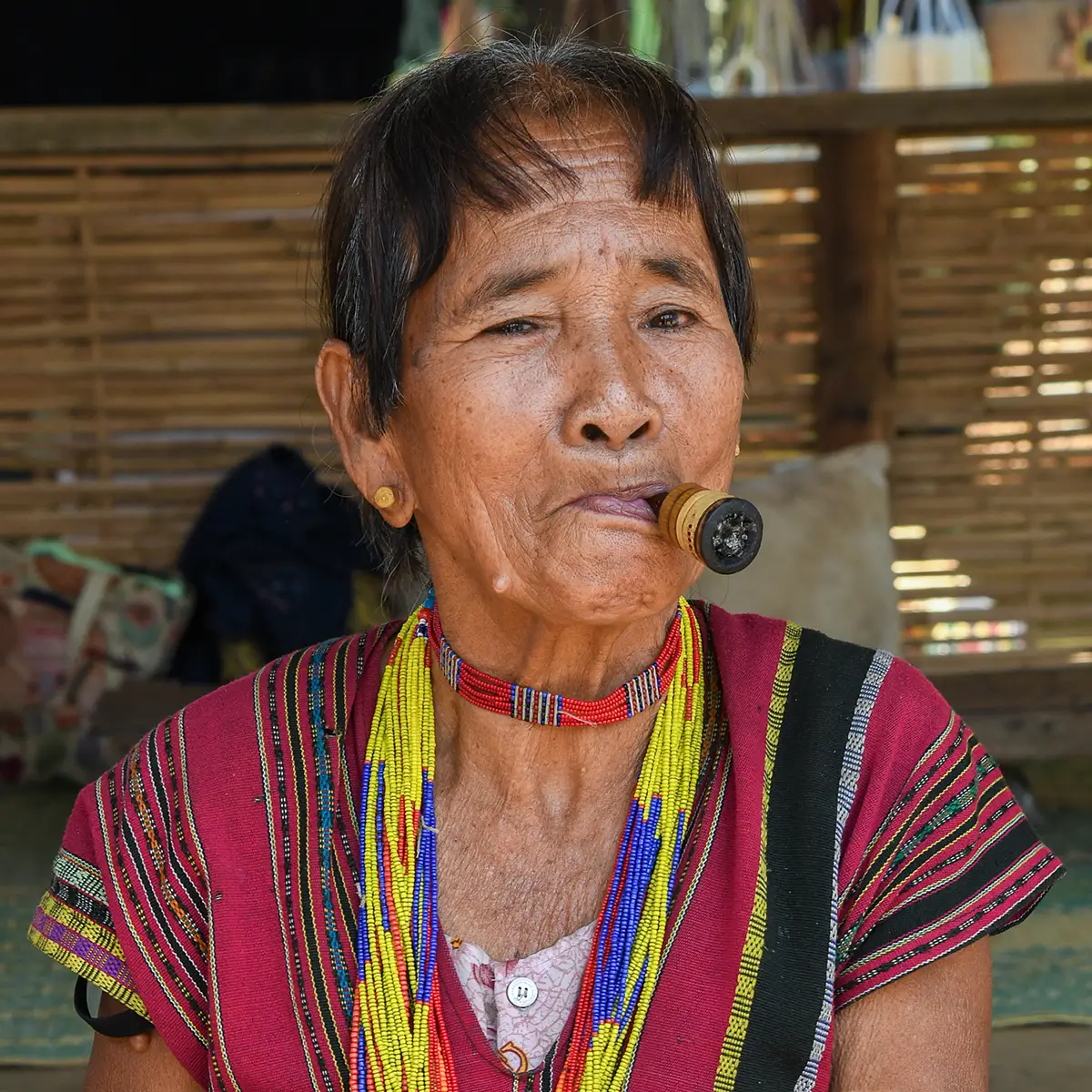
This will be a really good way to experience rural life and to immerse ourselves in the unique cultures, customs and daily life of these ethnic communities. We will be able to shoot various portraits as well as village life and some of the jungle landscapes we pass through.
The Khmu are among the original inhabitants of northern and central Laos, having lived in the region for at least 4,000 to 6,000 years. They are credited with founding the ancient city of Luang Prabang, which was under Khmer rule until the 14th century when the Lao people established their own state.
The Akha are an indigenous ethnic group in Laos known for their remote mountaintop villages, semi-nomadic highland farming, deep animist traditions, and elaborately decorated traditional clothing. The Akha migrated from the Tibetan Plateau hundreds of years ago, passing through Yunnan, China, and settling in Southeast Asia to escape regional unrest and political conflict.
The Tai Phuan Theravada Buddhist Tai-Lao ethnic group primarily inhabiting the Xieng Khouang Plateau and surrounding provinces in Laos, with large populations also residing in the Isan region of Thailand.History and OriginsMigrations: The Tai Phuan are part of the Tai-Kadai ethnolinguistic family. Their ancestors migrated from southern China (modern-day Yunnan/Guangxi) into Southeast Asia
After a full day of exploring the mountainous north, we will return to our comfortable jungle resort.
Included activities:
•Oudomxay - tribal village visits
Accommodation: Namkat Yorla Pa Resort Superior Room or similar
Meals Included: Breakfast
Today we travel by road from Muang Xay towards Luang Prabang, covering approximately 193 kilometres through scenic mountain landscapes. En route, we stop to visit the famous Pak Ou Caves, a spiritual site filled with thousands of Buddha statues.
The caves started to be used by tribal groups and Lao settlers in the 8th century to worship Phi - the spirits of nature at the river. Later they evolved into a royal Buddhist sanctuary and a respectful repository for retired or damaged Buddha statues. There are said to be over 4000 here.
After exploring the caves, we will continue our journey by boat for about two hours along the Mekong River, enjoying breathtaking views of limestone cliffs and lush greenery. Along the way, we will visit Ban Sang Hai, a traditional village known for its handmade rice wine, known as Lao Lao.
This cruise offers stunning photo opportunities of river life and serene countryside before arriving in Luang Prabang. Upon arrival, transfer to our hotel for check-in.
In the evening we can visit the night market, or optionally head to dinner and drinks at a local restaurant run by a good friend on mine a Dutch photographer and filmaker who has lived and worked in Laos for many years. We have visited this restaurant on every tour I have led to Laos, and we usually get to see some of the films he has made over the years whilst our food is being prepared.
Included activities:
• Pak Ou Caves visit
• Boat Trip from Pak Ou cave to Luang Prabang
• Ban Sang Hai Village visit
Accommodation: Homm Souvannaphoum Luang Prabang or similar
Meals included: Breakfast
Every morning that I am in Luang Prabang, I always want to get up early to witness the monks on their morning alms round. There are a number of different and atmospheric places that I can recommend, and every morning seems to be different experience.
After photographing the monks I usually drink a couple of Café Lao – served as a thick brew dripped in a glass over a layer of sweet condensed milk – I usually head to the Morning Market, which is at its most authentic shortly after sunrise.
After breakfast, we will experience a wonderful local elephant project in nearby Mandalao that will give you a new perspective and profound understanding of these magnificent animals. We will discover the mysterious beauty of the Lao jungle as we walk side by side with recently rescued elephants on stroll through their natural habitat – a perfect way for these happy creatures to enjoy their freedom after decades of hard labour in logging camps.
Our experience starts as we drive from our hotel to the village of Xieng Lom (approximately 30 minutes) before taking a quick boat ride across the Nam Khan River where we will be introduced to your new gigantic companions. We will be able to feed them some special treats (a sure way to win their friendship) followed by a gentle, therapeutic walk, that offers us the opportunity to absorb their calming energy as you wander along a small dirt path through the surrounding flora and fauna, past traditional farms and the Huay Nok stream – where you may be able to spot elephants splashing around in the water as they cool off from the hot Lao sun!
We will have a lunch at the project, where we will learn more about the plight of the Asian Elephant in Laos and how they are rescued at Mandalao. Intrepid Travel work with this project as they truly represent best practice when it comes to elephant rescue and elephant encounters. After our lunch we will return to Luang Prabang, where the rest of the day is free for our own individual explorations of this incredible town.
Included activities:
• Mandalao Elephant Conservation Visit
Accommodation: Homm Souvannaphoum Luang Prabang or similar
Meals included: Breakfast & Lunch
This morning we will embark on a 32 kilometre drive from Luang Prabang to the stunning Kuang Si Waterfalls. We will aim to arrive early, before most of the crowds and before the harsh light later in the morning.
The falls are a series of cascading into turquoise pools. The water is crystal clear, and swimming is allowed in some of the pools, making it a perfect spot to relax and soak in nature’s beauty. The falls are also perfect for long exposure photography to get an aesthetic blurred effect.
Adjacent to the Kuang Si falls Tat Kuang Si Bear Rescue Centre, which is a sanctuary for Moon Bears that have been rescued from the bear bile trade. We will be able to photograph some of these magnificent animals.
We are planning to leave the falls by taking a 30 minute walk through the jungle along a scenic trail surrounded by lush greenery and exotic flora, until we reach Ban Na Oane, a traditional Hmong village, where you can experience local culture and craftsmanship.
Later we will return to Luang Prabang, where we will have more time to explore the day to day life of this most photogenic of towns, and maybe take the opportunity to take a ferry over to the far bank of the of the Mekong River or photograph the sunset from the sunset point on the far side of the mouth of the Nam Khan.
At the end of the day, we will head out for our farewell dinner, and hopefully a review some of the images that we have managed to capture on our immersive adventure through Laos.
Included activities:
• Kuang Si Waterfall Visit
• Ban Na Oane Village visit
• Farewell dinner
Accommodation: Homm Souvannaphoum Luang Prabang or similar
Meals included: Breakfast & Dinner
There are no activities planned for our final day and you are able to depart the accommodation at any time. Check out time at 12:00 noon.
Departure transfer:
• Included (on a Group Basis)
Meals included: Breakfast
I have made the decision on this itinerary to skip the town of Vang Vieng on this itinerary. Although set amongst some wonderful scenery, the town itself has been completely spoilt, with over-tourism and lots of loud bars, techno music and drunken backpackers.
Skipping this town also saves us having to spend a full day driving from Vang Vieng to Phonsavan for the Plain of Jars. This would include five or six hours on Route 7 between Phou Koun and Phonsavan, only to return back the same way a couple of days later.
By skipping Vang Vieng, we will be able to fly from Vientiane to Phonsavan, and use the time that we save to head north from Luang Prabang to visit some of the hill tribes around Oudomxay. This small town also is surrounded by incredible scenery, but is also home to a number of traditional hilltribe villages.
This change along drastically reduces the about of driving on this itinerary, and certainly cuts out the vast majority of the repeat journeys - having to spend hours driving back on roads we have already driven. There is still a fair bit of driving though: there is no way to avoid this and still visit the incredible places that we visit. What we have done though is to spell out the longer estimated driving times on the itinerary. Please do review these travel distances and make a decision for yourself as to wether this adventurous itinerary is for you.
The longest journey on this itinerary is the drive from Phonsavan to Luang Prabang, but this takes us through some incredible scenery, and includes a lunch stop at the market town of Phou Koun. We should also be able to stop at a couple of roadside villages that cling to the ridge of high hillside peaks.
Although we have set out an itinerary above, there are always a number of gaps and things that are organised on the ground. One of the things that we specialise on my trips is wringing the most photo-opportunities out of any trip. In essence, this is the basis of all of our trips: it is not just the things that are listed on the itinerary that are the things that people remember, we are always seeking out things to stop for, engage with and photograph. There are a number of times when we have built in time to be flexible.
When we have any 'free time', I will usually be heading out to do something and you will, of course, be more than welcome to join me.