
Photograph the best of Sri Lanka: from historic & religious sites, to wildlife & tea plantations
Sri Lanka, often called the 'Pearl of the Indian Ocean,' is a vibrant island nation defined by its incredible geographical and cultural diversity packed into a relatively small area.
This diversity is reflected in our exciting itinerary, which visits a variety of landscapes from lush forests, unspoilt beaches and rambling tea plantations, explores over 2000 years or history and religion, delves into the culture of a number of significant towns, experiences the remnants of the colonial era, and seeks out some of the incredible wildlife and birdlife.
This itinerary represents a comprehensive exploration of Sri Lanka, which forms a perfect introduction, but also offer enough detail for those who have visited before. It will also include extensive photography support from professional travel photographer, Steve Davey, countless photo opportunities and the company of fellow photography enthusiasts.
We will start in the coastal town of Negombo, which is fringed by perfect beaches and noted for the Lellama Fish Market - hailed as the largest in the country. It is also the close to the international airport, making it a perfect start for the trip. The fish market is a fantastic location for photography, and we can also photograph fishermen landing fish on the beach in the early morning.
Today is Poya Day, or full moon day, and we will spend this auspicious time exploring Anuradhapura. This is a public holiday, and as Anuradhapura is the cradle of Theravada Buddhism in the country, it will be celebrated here like a religious festival. It will be an incredible time to visit and something truly spiritual to experience.
As the island’s first grand capital, this UNESCO World Heritage site is dominated by colossal dagobas—massive brick stupas like the Ruwanwelisaya and the Jetavanaramaya—which were once some of the tallest structures in the ancient world, second only to the Pyramids of Giza.
Although the site comprises of many ancient ruins, they are still active pilgrimage sites, and ring to the soft sound of Buddhist chanting. This is especially the case at the Sri Maha Bodhi Tree Temple – home to a sacred bodhi tree planted in 236, believed to be the oldest human-planted tree in the world, from a cutting of the tree under which the Lord Buddha gained enlightenment. Being here on Poya day will be especially atmospheric as it will attract many devotees, who will be dressed in white.
Our next stop on the Sri Lankan Cultural Triangle is Polonnaruwa, which was the Sinhalese and Chola capital in the 10th century, where we will explore well-preserved temples, tombs and stupas in Polonnaruwa’s Quadrangle complex.
We will also visit the remains of the seven-story palace built by King Parakramabahu, the rock temple of Gal Vihara, the giant stupa of Rankot Vihara and the ancient Buddha image house of Lankatilaka, covered in intricate carvings and housing a towering statue of Buddha.
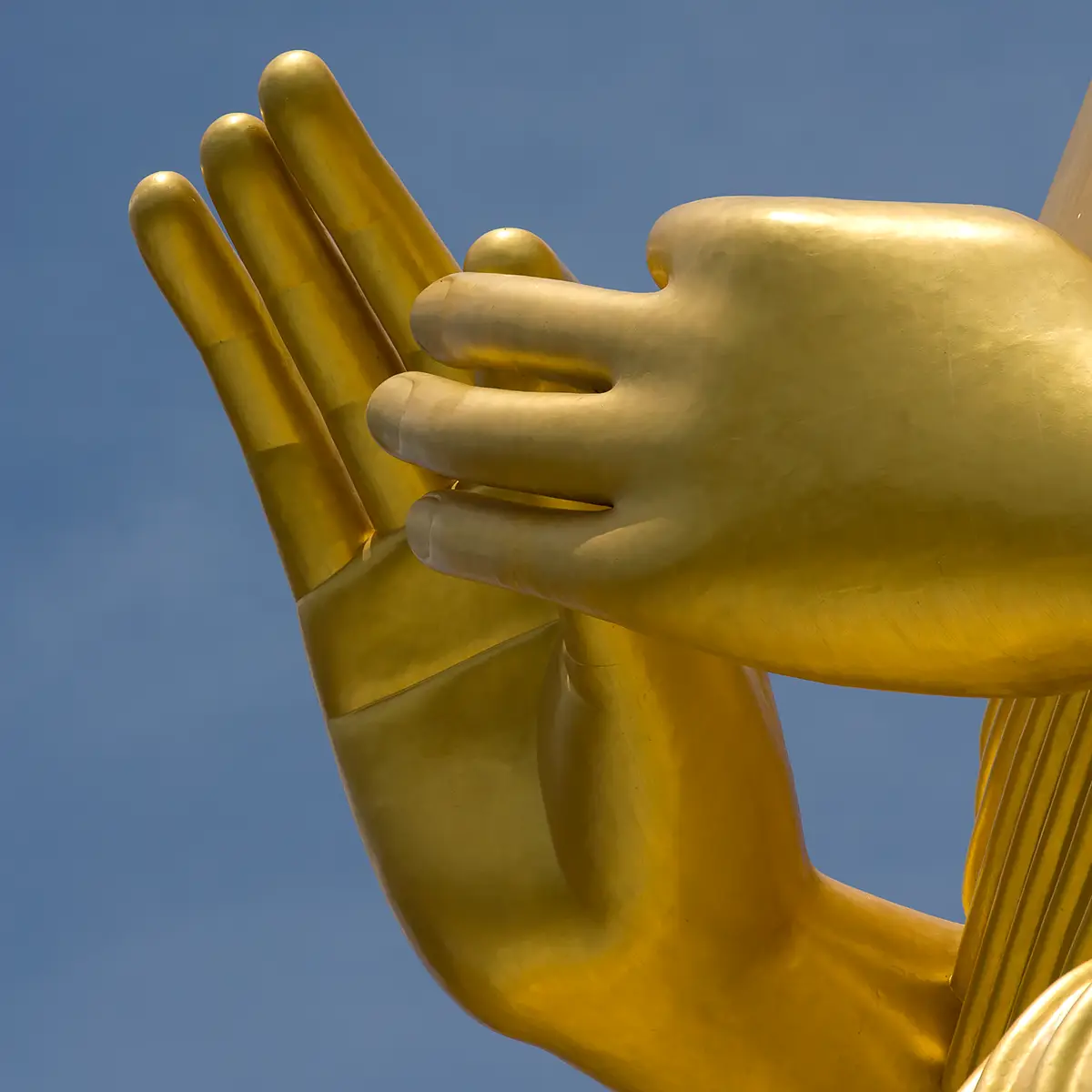
Moving on, we head to Dambulla – home to an incredible Cave Temple, which comprises of five caves filled with around 150 beautiful statues and paintings of Buddha – some as many as 2000 years old. A modern and vast golden Buddha image sits at the entrance of the complex.
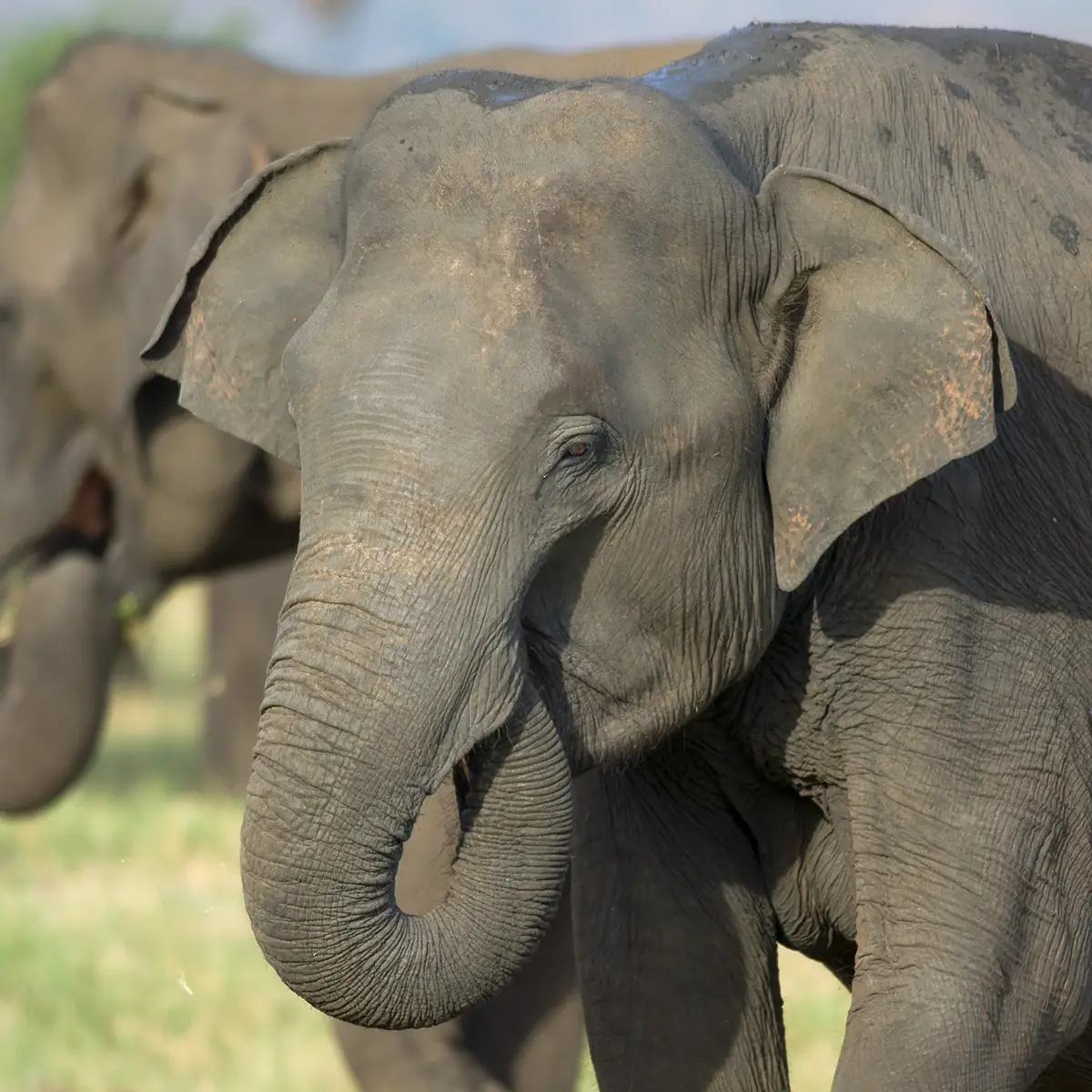
Today, we will also visit the Minneriya National Park, which is arguably the best place in the country to see Asian Elephants in the wild. The park contains an artificial reservoir which was constructed by King Mahasen in the 3rd century.
Our overnight location for Dambulla is very close to the most spectacular site in Sri Lanka: Sigiriya. This ancient fortress is built on top of a massive, 200 metre high rock that rises dramatically out of the Sri Lankan jungle. It features beautiful gardens, colourful frescoes of maidens, and two giant lion paws carved into the rock entrance, which gives it its alternative name – Lion Rock.
Lion Rock is best experienced by climbing 1,200 steep steps that lead you to reach the flat summit, where you are rewarded with breathtaking, 360-degree views of mist-covered jungles, emerald green forests, and rolling hills stretching as far as the eye can see. The next day we will climb another viewpoint, Pidurangala Rock, to face Sigiriya at sunrise.
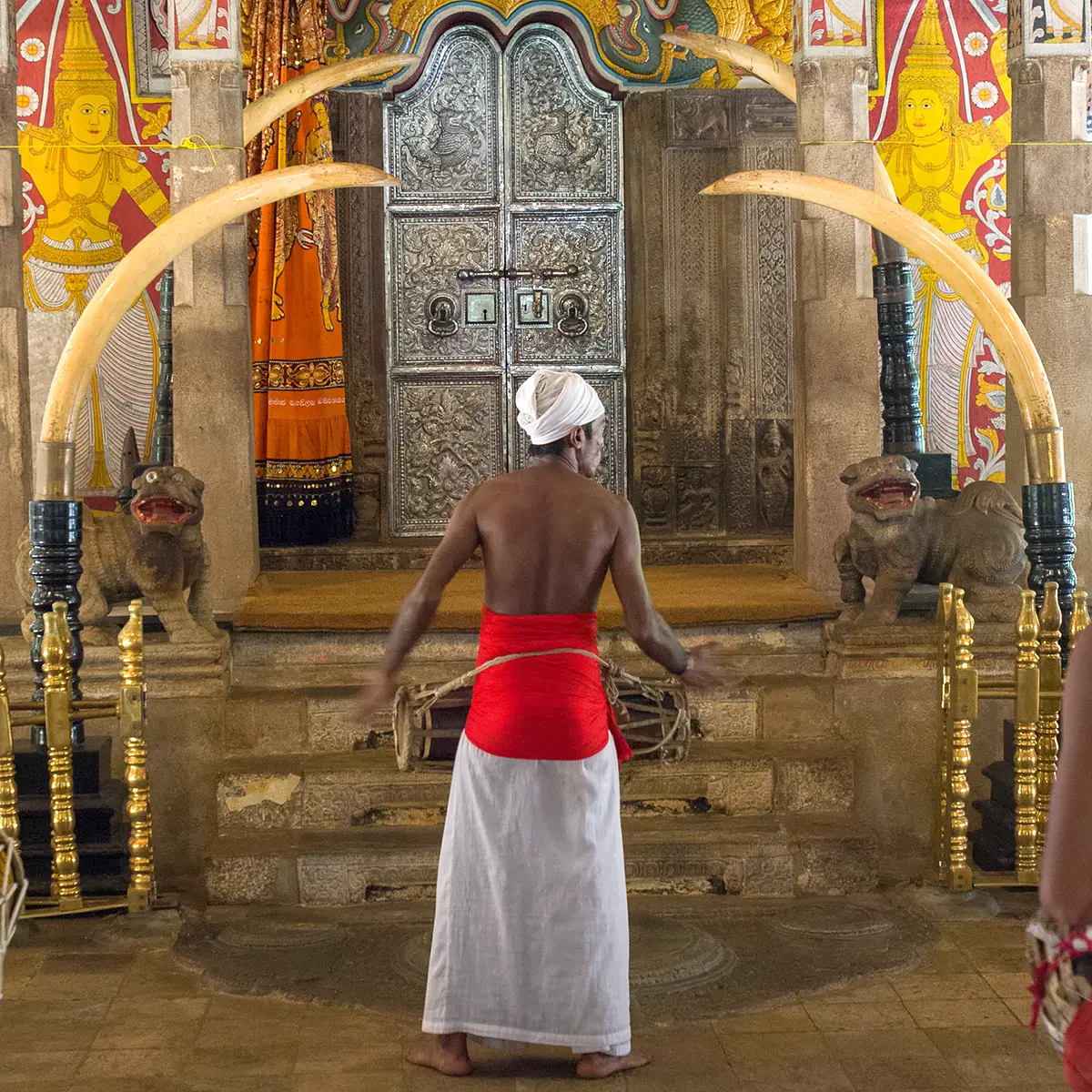
Our next stop will be the thriving city of Kandy, which is home to the Temple of the Tooth, which houses a relic of Lord Buddha, and is still attracts many pilgrims and is witness to regular pujas of chanting and drumming. We will witness the most atmospheric of the three daily poojas: will also have a private traditional dance display at the home of a local dancer.
In Kandy we will also go birdwatching in the Royal Botanical Gardens. This originated as 14th-century royal pleasure grounds before being formally established by the British in 1843. Home to over 4000 plant species, we will also hope to spot Yellow Fronted Barbets, Layards Parakeets and Sri Lankan Hanging Parrots.
After Kandy, we will catch the famous scenic train to the high hills town of Nuwara Eliya, at 1800 metres, where we will stay at the atmospheric Grand Hotel, which dates back to 1891, and was the previous home of a British Governor during the colonial era.
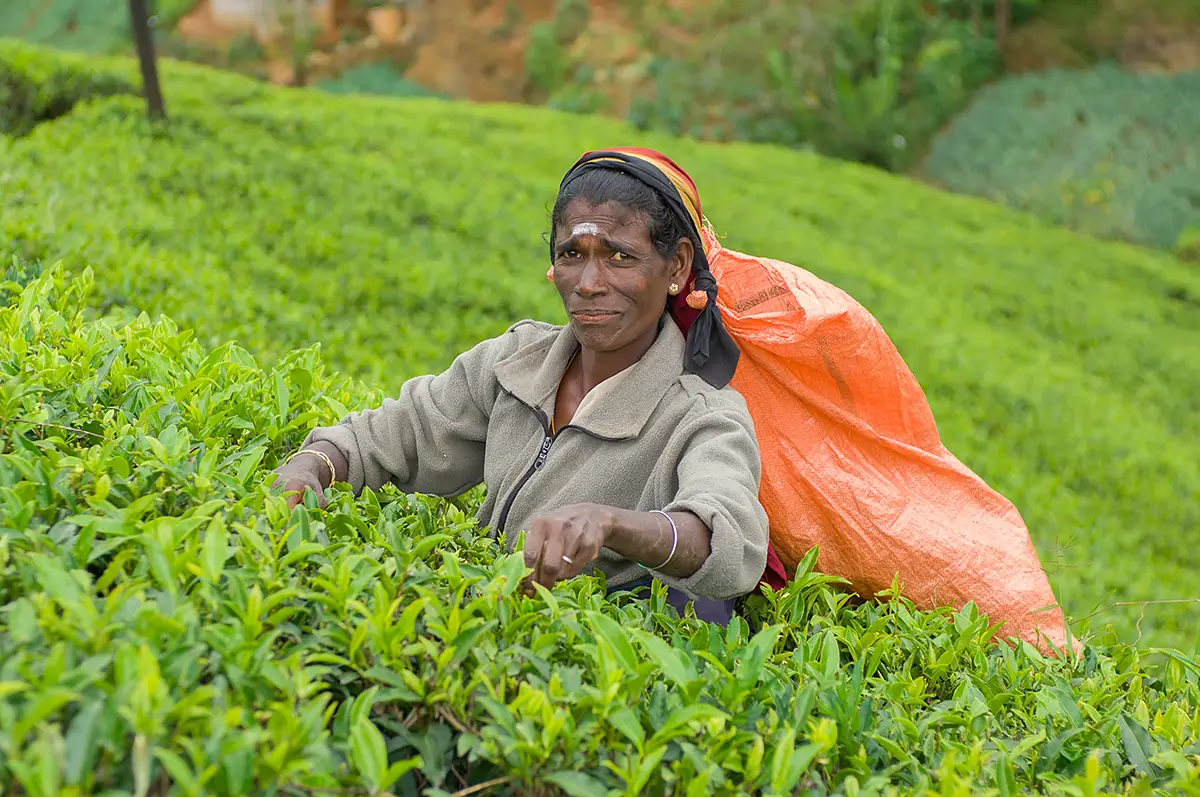
In Nuwara Eliya we will enjoy an atmospheric hike to the scenic Single Tree Hill Viewpoint and the Single Tree Temple, before visiting a tea plantation to see the tea making process. As we drive around the area, we will also keep a look out for scenic areas of tea plantations, which are often planted in ornate shapes, and local tea pickers.
We will also have a lunch at the Nuwara Eliya Golf Club – one of the oldest golf clubs in Asia, founded in 1889.
On our way South, we will visit the town of Ella, home to the scenic Ella Gap, which has breathtaking views out to the plains. Our destination is Tissamaharama, which is conveniently located for the quieter back gate of Yala National Park.
Yala is Sri Lanka's premier wildlife reserve, comprising of open grasslands, lush forest and lagoons. There is a good chance of spotting crocodiles, elephants, monkeys and buffalo and if you’re lucky, you may even spot a leopard – the park is considered one of the best places in the world to see these elusive big cats.
We will have two 4WD safaris in the park, before having the chance to visit the Kataragama Temple, which is revered by Buddhists, Hindus, Muslims and the minority indigenous Vedda people.
The historic town of Galle represents the Dutch influence in Sri Lanka, and at is core is the iconic Fort, which is surround by the ocean on three sides. We will have time to explore the atmospheric streets and markets.
Our final stop is the capital city of Colombo, which is vibrant mix of colonial-era buildings, bustling markets like Pettah, and modern landmarks like the Lotus Tower. We will visit the market and the adjacent Jami Ul-Alfar Mosque Red Mosque, which is the oldest in town.
Why I think our Sri Lanka photo tour is unmissable
Sri Lanka is an entrancing mix of cultures and religions; set against a rich and varied history. There is great variety here too – one day you can be lazing on a topical beach, the next wandering through lush tea plantations.
Our trip is timed for the monthly full moon Poya Day: a national holiday where devotees dress in white and spend the day praying in religious sites. We will be at Anuradhapura – the ancient ruling city for almost 1500 years and one of the most holy places in the country, so there will be a particularly high number of devotees here, and an incredible atmosphere.
Two of the most stunning sites here are the Ruwanweliseya Stupa, which was built in 140 BC to house relics of the Buddha. Interestingly this structure is painted slightly blue-white to make it appear more bright. We will also photograph the brick Jetawanaramaya Stupa, which at 122 metres was the third largest structure of its era – after two of the Great Pyramids!
Most importantly we will also be able to visit the Jaya Sri Maha Bodhi Temple, which houses a cutting from the tree under which the Buddha gained enlightenment. As one of Sri Lanka's most revered pilgrimage sites, the atmosphere here will be particularly special.
There are many other archaeological sites in Sri Lanka : as an overwhelmingly Buddhist country these sites are often Buddhist in nature, with many ancient stupas bearing relics of the Lord Buddha and also with giant Buddha images.
These are particularly varied, and as well as Anuradhapura, two of my favourite archaeological sites in the country are the breathtaking Dambulla Caves, and the stunning Lion Rock at Sigiriya. We will have the opportunity to climb to the fortifications at the top of the rock in the early morning light, as well as photographing it at sunrise from the nearby Pidurangala Rock.
One of the travel highlights of South Asia is the scenic train ride from Kandy to Nuwara Eliya on the famous blue train, which winds its way through the Central Highlands past rolling tea estates.
Once we arrive we will be able to enjoy the sight of ornate rolling tea plantations in the cooler atmosphere and photograph the sari-clad tea-pickers making their way between these well-groomed plants. We will be staying at a colonial era Hotel and enjoying a lunch at the historic Nuwara Eliya Golf Club.
Sri Lanka is a fantastic wildlife destination. We will encounter Toque Macaques and Tuften Grey Langurs in many locations, but specifically will explore the Minneriya National Park, where we will see herds of Asia Elephants. We will also enjoy two wildlife safaris in the incomparable Yala National Park. This is one of the best places in Asia to see wild Leopards, and is also home to elephants, crocodiles and many other animals and birds.
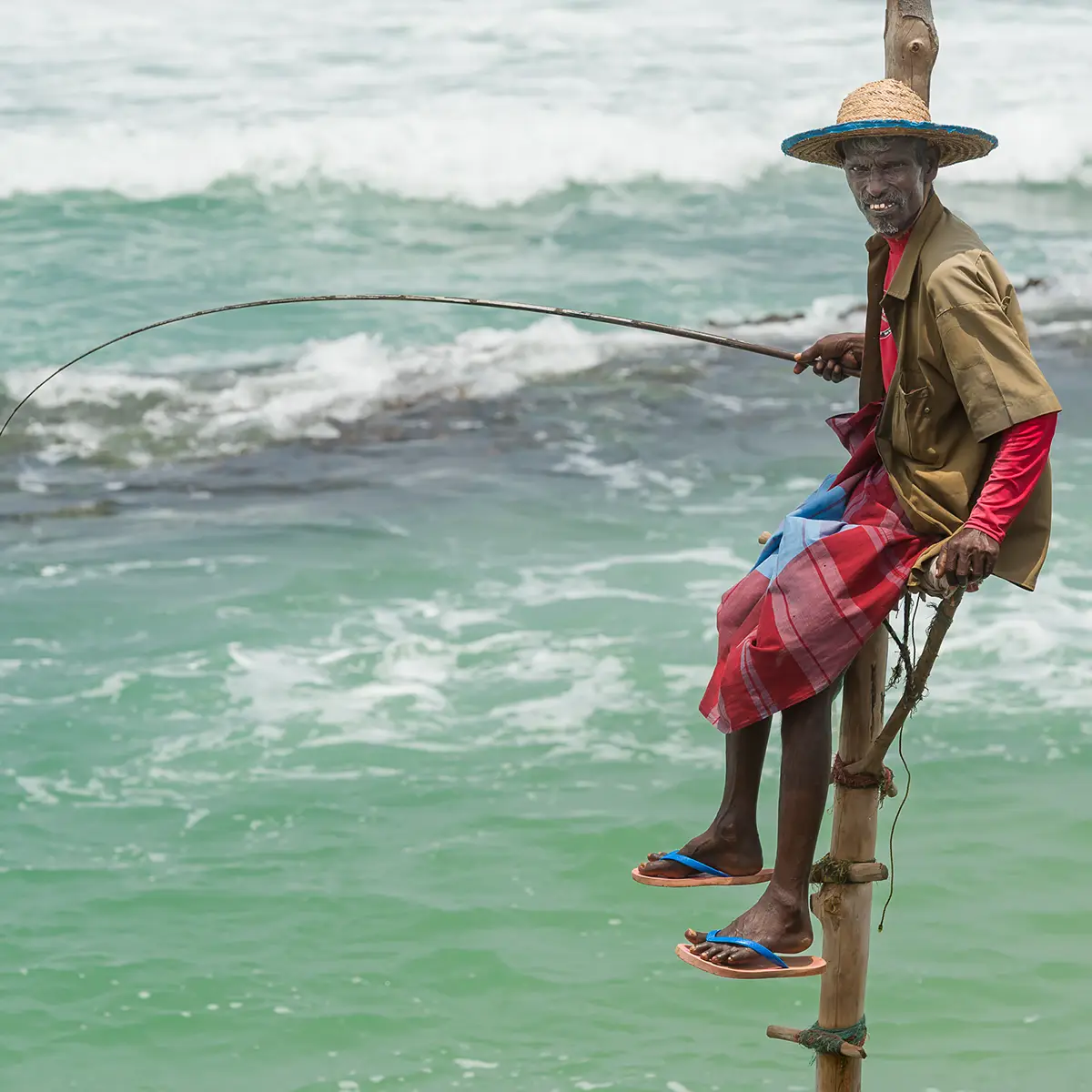
The coastline of Sri Lanka is stunning ringed palm-fringed, white sand beaches, and if we are lucky we will be able to photograph the unique stilt-fishermen, who sit up poles to give them a better angle to catch fish.
The city of Galle is a major highlight on this trip for me. I love the laid back atmosphere of the old town and the fort, its position next to the coast and the bustling and thriving food markets.
I am even quite fond of Colombo which boasts a number of photogenic places, including the sprawling Petah food market and the bewilderingly eclectic Gangaramaya Temple, with its countless Buddhas and historic bric a brac. We will be able to end our day watching the sunset at the historic Galle Face Green.
As usual, we will encounter a wide range of people on this trip: monks, nuns, tea-pickers, traders, farmers and a wide variety of the welcoming and friendly population of Sri Lanka. It is always local people who make any overseas trip, and we have built in many opportunities to engage people.
We have, of course, also built in plenty of time to explore the incredible and unique cuisine of Sri Lanka. This will include visits to local fish and vegetable markets, as well as some great restaurants. As you might imagine we will also find time to sample the local Coconut Arrack and the palm Toddy drinks!
I hope that you decide to join me on this unique photographic exploration of this island pearl which is Sri Lanka.
Steve Davey
Photography opportunities
There are a many atmospheric and photogenic things that you will be able to experience on this trip. Our unique itinerary will give you as many real, and organic photo-opportunities as we can cover on our time away. We are also able to include pretty much anything that you find interesting as drive along: whether it is local people working in tea plantations a photogenic stupa or view.
Some of the photographic opportunities you will enjoy on this trip include:
- Negombo Fish Market - Bustling main seaford market
- Negombo Beach - Boats landing fish and fish drying on beach
- Anuradhapura - Throngs of white-clad devotees on Poya Day
- Anuradhapura - World Heritage Site of ancient kingdom ruins
- Anuradhapura - Massive white Ruwanweliseya Stupa
- Anuradhapura - Jetawanaramaya Stupa, one of highest structures of the ancient world
- Anuradhapura - Praying pilgrims at the Jaya Sri Maha Bodhi Temple
- Polonnaruwa - Sprawling ancient ruins of temples and stupas
- Polonnaruwa - 10 metre standing statue of Parakramabahu I
- Polonnaruwa - 14 metre reclining stone Buddha in Gal Vihara temple
- Dambulla - Historic cave temple dating back to 1st century BCE
- Dambulla - Giant golden Buddha statue
- Minneriya National Park - Asian elephants in large herds
- Sigiriya - The citadel and views from the top of Lion Rock
- Sigiriya - The exquisite 1500 year old Sigiriya Frescoes
- Sigiriya - Traditional Chena cultivation project
- Sigiriya - Sunrise views of Lion Rock from Pidurangala Rock
- Matale - Spice gardens visit
- Kandy - Birdlife at historic Royal Botanic Gardens
- Kandy - Gem museum and workshop
- Kandy - Private traditional dance display
- Kandy - Atmospheric evening pooja at Temple of the Tooth
- Kandy to Nuwara Eliya train - scenic rail route though tea plantations
- Nuwara Eliya - Tea plantations and tea pickers
- Nuwara Eliya - Historic Grand Hotel & Golf Club
- Nuwara Eliya - Single tree hill
- Nuwara Eliya - Historic tea processing factory
- Nuwara Eliya - Tea plantations and tea pickers
- Ella - Picturesque Ella Gap
- Katarangama - Historic Kataragama Temple complex
- Yala National Park - Safaris looking for Leopards and elepants
- Galle - Historic Galle Fort
- Galle - Beeralu lace weaving display
- Galle - Fish and farmers' markets
- Galle - Stilt fishermen near to~Galle
- Colombo - Atmospheric Pettah fruit and veg market
- Colombo - Historic Jami Ul-Alfar Mosque (Red Mosque)
- Colombo - Eclectic interior of the Gangaramaya Temple
- Colombo - Sunsets at Galle Face Green
Impressions of Sri Lanka photography tour
- full details
Below you can find all of the details about Steve Davey, who has organised and will be leading this classic photo tour of Sri Lanka, Intrepid Travel, who will be handling the land arrangements and bookings, as well as the full price information, dates and what is included in the trip price; and the full itinerary.
Impressions of Sri Lanka
12 to 26 November 2027
Places left: 6*
*Includes held places
Min 7, max 12 people
Variable price from:
7 pax £3595 pp
8 pax £3495 pp
9 pax £3395 pp
10 pax £3350 pp
11 pax £3295 pp
12 pax £3250 pp
excl. flights, based on roomshare
Price is variable depending on the number of people booked on the trip. You should be prepared to pay the 8 person price; refunds will be processed once the final numbers are confirmed.
Optional single supplement: £675
Although you can opt for a roomshare place, and we will do our best to find someone for you to share with, if this is not possible and you have to have a room to yourself, then unfortunately the single supplement will be payable.
Included in the trip price
- 11 nights hotel accommodation
- 2 nights feature accommodation
- 13 breakfasts, 3 lunches & 5 dinners
- Group arrival transfer
- Scenic train ride from Kandy to Nanu Oya
- Negombo – Morning fish market visit
- Anuradhapura – Ancient Kingdom ruins
- Anuradhapura – Bodhi Tree Temple
- Polonnaruwa – Ancient city ruins
- Dambulla Cave Temples
- Minneriya National Park Safari
- Sigiriya – Lion Rock at Sunrise
- Sigiriya – Chena Cultivation tour
- Pidurangala – Sunrise view of Lion Rock
- Matale – Spice Garden visit
- Kandy – Botanical Gardens
- Kandy – Temple of the Tooth
- Kandy – Hela Bojun social enterprise lunch
- Kandy – Gem museum & lapidary workshop
- Kandy – Private Dance Performance
- Nuwara Eliya – High Tea
- Nuwara Eliya – Tea State & Tea Factory visit
- Nuwara Eliya – Single Tree Hill hiking
- Nuwara Eliya – Golf Club lunch
- Ella – Ella Gap view point
- Yala National Park – Evening wildlife safari
- Yala National Park – Morning wildlife safari
- Galle – Galle Fort Walking tour
- Galle – Beeralu lace weaving activity
- Galle – Farmers' market
- Galle – Home cooking class
- Colombo – City walking tour
- All transport as per itinerary
- English Speaking leader
- Entrance fees as per itinerary
- Expert photographic support
Not included in the trip price
The following things are not included in the trip price:
- International Flights
- Any visas required
- Services not mentioned in the itinerary
- Late check out at hotels
- Meals/drinks not mentioned in the itinerary
- Drinks with included lunches and dinners
- Tips for leaders, guides and drivers
- Expenditure of personal nature
- Personal Insurance
- Optional activities
Although international flights aren't included in the trip price, you can opt to have Intrepid Travel buy these for you which gives you a greater level of industry protection, and if your journey starts and finishes in the UK the trip can be covered by an ATOL certificate.
Sri Lanka Photo Tour – Full Tour Itinerary
The full itinerary of our classic travel photography tour to Sri Lanka, including the Yala and Minneriya National Parks, the tea plantations of Nuwara Eliya and the historic city of Kandy, with land arrangements and comprehensive travel industry ATOL protection by Intrepid Travel; led by professional photographer, Steve Davey.
Ayubowan! Welcome to Sri Lanka. When you arrive at Bandaranaike International Airport in Colombo, you’ll be met by an Intrepid representative and transferred to your hotel in nearby Negombo. Here, you’ll meet your leader and fellow travellers at a 6 pm welcome meeting. If you arrive early, maybe take some time to relax on the beach under the blue sky. After your welcome meeting, your leader will take you to a local restaurant for a seafood dinner. Sri Lankan food is famous for its rich scents, spices and flavours, and this evening you’ll find out why as you sample some local favourites like pol sambol (a tasty coconut dish) and roast paan (crispy roasted bread).
Special Information
It’s very important that you attend the welcome meeting as we will be collecting insurance and emergency contact details at this time. If you are going to be late, please let your travel agent or hotel reception know. Ask reception or look for a note in the lobby for more information on where the meeting will take place.
Some travellers have reported being approached by locals offering excursions before their Intrepid trip commences. This has been particularly prevalent in and around the hotels used by Intrepid. These guides are in no way connected to Intrepid and we cannot guarantee the safety or quality standards of their tours. We advise customers against joining any tour offered by the unauthorised guides.
Arrival transfer:
Included on Group flight basis only
Accommodation: Jetwing Sea Negombo or similar
Meals included: Welcome dinner
Today we will start off with a very early start to get to the famed Negombo Fish Market. Here fishermen will be landing fish on a stunning beach and carrying them to the bustling fish market, where they will be auctioned, displayed and sold.
On the beach we will be able to see another of the great Negombo sights: fish being laid out to dry before being taken to the market. Negombo is colourful, lively and very photogenic – usually! However, today is the known as the Full Moon Poya Day, which makes it the perfect day to see pilgrims and devotees at Anuradhapura later in the day.
Poya Day might also mean that the Negombo Market is closed, or at least quiet. If this is the case then we have built in the time to visit in on our last morning, as the market is only 30 minutes from the International Airport.
After the market, we will travel north by private vehicle to Anuradhapura These grand ruins the point to its status as Sri Lanka’s ruling city for almost one and a half millennia. We will visit the many archaeological sites, which will include stupas, a citadel and monasteries. This will include the Ruwanweliseya Stupa, which was built around 140 BC to house relics of the Buddha, and the Jetawanaramaya Stupa, which at 122 metres was the third largest structure in the World when it was built in the 3rd century CE; behind the Great Pyramid of Giza and the Pyramid of Khafre.
We will also visit the Jaya Sri Maha Bodhi Temple, which houses a sacred fig tree grown from a cutting of the original Bodhi Tree in India under which the Buddha attained enlightenment. Planted around 288 BCE, it is recognised as the oldest human-planted tree in the world with a known planting date and remains one of Sri Lanka's most revered Buddhist pilgrimage sites.
Because we are visiting these sacred sites on the Poya Day, which is also a public holiday, it will be incredibly atmospheric, and like a festival in its own right. There will be many devotees and monks, and a very spiritual atmosphere. Once we have finished we will proceed to our hotel and the rest of the day will be at leisure.
Special Information: Our total travel time today will be approximately 5 hours.
Included activities:
• Negombo Fish Market
• Anuradhapura - World Heritage Site of ancient kingdom ruins
• Anuradhapura - Bodhi Tree Temple
Accommodation: Rajarata Hotel or similar
Meals included: Breakfast
We will bid farewell to Anuradhapura and make our way to Polonnaruwa to continue our explorations of the cultural triangle. Following Anuradhapura as the Sinhalese and Chola capital in the 10th century, the area is strewn with ancient riches. We will discover well-preserved temples, tombs and stupas in Polonnaruwa’s Quadrangle complex – it’s not hard to imagine what this place looked like in all its former glory.
We will visit the remains of the seven-story palace built by King Parakramabahu, the giant stupa of Rankot Vihara and the ancient Buddha image house of Lankatilaka, covered in intricate carvings and housing a towering statue of Buddha. Most photogenic, you must stop by the incredible statue of Parakrama I, which at 10 m tall this is a truly impressive sight. One of the most photographed places is the the rock temple of Gal Vihara, with its 14 metre stone cut reclining Buddha. After exploring the ancient ruins of Polonnaruwa, head to our accommodation for the night in Polonnaruwa.
Special Information: Our total travel time today will be approximately 2.5 hours.
Included activities:
• Polonnaruwa ancient ruins
• Polonnaruwa - Statue of Parakramabahu I
• Polonnaruwa - Rankot Vihara
• Polonnaruwa - Quadrangle
• Polonnaruwa - Lankatilaka
• Polonnaruwa - Gal Vihara
Accommodation: Sudu Araliya or similar
Meals included: Breakfast
This morning, we’ll take a short drive to the incredible Dambulla Cave Temple. Here, you’ll discover five caves filled with around 150 beautiful statues and paintings of Buddha – some as many as 2000 years old. Explore the magical cave complex as your leader explains why this World Heritage-listed site has been a place of worship for thousands of years.
Outside of the cave complex is a modern temple building dating from 2001, which is topped by a 30 metre Golden Buddha, in the Dhamma Chakka mudra (the Wheel of Law or teaching posture), where the thumb and index finger touch to symbolise the transmission of Buddhist teachings.
In the afternoon we’ll head into Minneriya National Park for a safari, watching the changing landscape from your 4WD as the sun goes down. Famed for its ancient reservoir, the Minneriya Tank, built in the 3rd century AD by King Mahasen, Minneriya is the premier destination in the country to see large herds of wild Asian elephants. After our safari, we will spend the night in leafy Habarana, a small, vibrant city in the North Central Province of Sri Lanka.
Special Information: Our total travel time today will be approximately 3-4 hours.
Included activities:
• Dambulla - Cave Temples
• Minneriya - National Park Safari
Accommodation: Kassapa Lion Rock or similar
Meals included: Breakfast
Early this morning, before the heat is too intense, you’ll head to Sigiriya. This ruined fortress is one of Sri Lanka's premier sights and a UNESCO World Heritage site. Those who make it to the top are rewarded with astounding views. Make sure you’re wearing sturdy footwear, as this is a very steep climb with some uneven slopes. Those unable to climb to the top can explore the gardens at the base of the rock and still get some fantastic shots of the fortress from below.
Built in the 5th century AD by King Kashyapa, Lion Rock (Sigiriya) in Sri Lanka served as a formidable palace-fortress atop a 200 metre high granite column following a royal power struggle. After the king's death, the complex was abandoned as a royal citadel and functioned as a Buddhist monastery until the 14th century.
Climbing the 1200 metal steps involves winding past ancient water gardens, a polished 'Mirror Wall,' and the iconic colossal stone lion paws guarding the final ascent to the summit. The steps also take you past an overhang bearing the Sigiriya frescoes: beautiful, 1,500-year-old rock paintings of graceful women floating in the clouds, created during the reign of King Kashyapa.
At the top, visitors are rewarded with expansive 360-degree views of lush tropical jungle, misty hills, and the fascinating, layout-preserved brick foundations of the ancient royal palace.
We will return to the hotel for well deserved late breakfast. Next, see the age old traditions at a nearby chena cultivation area, which is one of the oldest forms of agriculture known to humans. It’s particularly popular in the dry zone of the country where it rains for only a few months of the year, and principal crops are tropical vegetables, cereals, grains, yams and corn. Then, we will feast on a tropical vegetable curry made with tapioca and fried fish caught in the nearby lake for lunch.
After lunch we will head back to our hotel where the rest of the day is free for our own adventures
Special Information: You’ll need to be of a good fitness level to climb the rock fortress at Sigiriya, as there are many steep, stone steps to the top, and also have a fairly good head for heights. The view from the top is worth all of the effort though.
Included activities:
• Sigiriya - Lion Rock at Sunrise
• Sigiriya - Chena Cultivation tour
Accommodation: Kassapa Lion Rock or similar
Meals included: Breakfast & Lunch
Start early for a sunrise climb at Pidurangala Rock, one of the most rewarding viewpoints in the Cultural Triangle. The short ascent leads to a wide, open summit facing Sigiriya Rock, which slowly emerges from the morning mist as first light spreads across the jungle. Soft colours, layered landscapes, and calm conditions make sunrise the ideal time for photography. After descending, return to the hotel for a well-deserved breakfast.
Afterward, start our journey to Kandy. Along the way, stop off in the city of Matale where you will visit a local spice garden and learn about the spices that have played such an important role in Sri Lanka’s cultural heritage.
Continue to Kandy where we’ll have a free evening to explore. Though it’s the second largest city in the country, Kandy maintains a laidback atmosphere. Founded in the 14th century, Kandy served as the final royal capital of the ancient Sinhalese kings and famously held out as an independent kingdom against centuries of Portuguese and Dutch attempts at colonisation before eventually falling to the British in 1815.
Kandy's historic and cultural centre revolves around the 16th-century Temple of the Sacred Tooth Relic, which has long made the city the spiritual heart of Sri Lankan Buddhism.
In the evening, we can takeg a peaceful stroll along the softly lit perimeter of Kandy Lake, and unwind at one of the city's hillside rooftop lounges, like Slightly Chilled, to grab a drink and enjoy panoramic night views over the city valley.
Or we can just hang out in our is a historic, 4-star colonial-style hotel right across from the tranquil Kandy Lake. Originally built in the 17th century and operating as a hotel since 1890, it famously served as the headquarters for the South East Asia Command during World War II.
Special Information: Our total travel time today will be approximately 2.5 hours.
Included activities:
• Pidurangala at Sunrise
• Matale Spice Garden visit
Accommodation: Hotel Suisse or similar
Meals included: Breakfast
This morning, we will meet with a local botanist for their expert insight as we take a guided tour of the Royal Botanical Gardens. Our guide will help us spot Yellow Fronted Barbets, Layard's Parakeets and Sri Lankan Hanging Parrots, and introduce you to an unbelievable array of orchids.
The Royal Botanic Gardens span 147 acres along a loop of the Mahaweli River and house over 4,000 species of tropical flora. It was established by the British in 1821 , though the land had been used as a Sinhala royal pleasure garden since the 1300s. It is world-renowned for its extensive orchid collection, giant Java fig tree, and towering avenues of royal palms.
After the Botanic Gardens, we will visit the gem museum and lapidary, where we can learn about the history of gem mining in Sri Lanka and see how gems are turned into beautiful pieces of jewellery.
Today’s lunch is particularly special as we will dine at Hela Bojun – a social enterprise founded by the Sri Lankan government to empower, train and employ women from rural communities.
In the afternoon, we will be welcomed into the home of a local dancer where we will have the unique opportunity to watch and photograph an exclusive cultural performance in an intimate environment.
The highlight of our trip to Kandy will come as we enjoy an evening visit the famous Temple of the Tooth Relic. Located in the heart of town, this is the most important shrine in the country, housing a relic of a tooth of Buddha taken from his funeral pyre. The original temple on the site was first built around 1595 (making the site’s foundation roughly 430 years old). However, the physical structure you see today is about 300 years old.
We will time our visit to witness the evening pooja – the most atmospheric and intense of the three daily rituals, held daily around 6:30 PM to 8:00 PM. It is led by resident monks from the Malwatte and Asgiriya chapters along with traditional hereditary lay attendants.a small ceremony of reverence involving drummers and dancers.
The ceremony begins on the lower floor with traditional Hewisi drummers and flute players clad in white and red traditional attire. The echoing drumbeats signal to worshippers throughout the complex that the sacred proceedings are starting.
The chief service monk unlocks the heavy, gilded doors of the upper-floor inner chamber where the tooth relic is housed. While the actual tooth relic is never exposed to the public eye, the altar window of the inner shrine is opened. Devotees filing past in a continuous, slow-moving line get a brief, close-up look at the massive, jewel-encrusted Golden Stupa Casket that contains the relic.
Devotees place offerings – primarily fragrant lotus and jasmine blossoms – onto long alter tables as monks chant ancient Pali prayers, burn incense, and perform ritual lamp offerings inside the inner sanctum.
After this spiritual experience at the Temple of the Tooth, we can head out for dinner before returning to our hotel.
Included activities:
• Kandy - Royal Botanical Gardens
• Kandy - Gem museum & lapidary workshop visit
• Kandy - Hela Bojun social enterprise lunch
• Kandy - Private Cultural Dance Performance
• Kandy - Temple of the Tooth pooja visit
Accommodation: Hotel Suisse or similar
Meals included: Breakfast & Lunch
We will depart Kandy and board a morning train bound for Nanu Oya, a station 8 km from Nuwara Eliya. Widely considered one of the most scenic railway journeys in the world, this train ride climbs slowly through emerald tea plantations, cascading waterfalls, and mist-shrouded mountain valleys. Taking roughly four hours, the classic blue train offers open windows and doors that let travelers soak in the fresh highland air and panoramic views of Sri Lanka's Central Highlands.
Situated deeper into tea plantation country, Nuwara Eliya sits at an elevation of 1800 metres, making it one of the coolest regions in Sri Lanka. Once favoured by the Scottish and the English, remnants of the past can be seen in sculpted gardens and manor homes decorating the city. When we arrive, we can explore the charming town at our own pace before heading to our spectacular accommodation.
Tucked away among tea plantations and scenic hills is the Grand Hotel – a gorgeous National Heritage Property first established in 1891 and our Feature Stay for the next two nights. A nod to the region's history, rooms are classically decorated with all modern amenities. At its core is the hotel’s sustainable practices – they’ve eliminated single-use plastic and are striving for a zero-waste future.
This afternoon, we will enjoy a high tea experience at our hotel. Converted from the former home of a British governor, the hotel now offers an impressive selection of tea paired with finger food and confectionery. Later we can explore the hotel’s palatial gardens or settle in for a first-class dining experience at the on site restaurant.
Special Information: Your total travel time today will be approximately 3.5 hours.
Train tickets are in very high demand. We need the passport details of the clients 45 days prior to arrival in order to try and secure train tickets. We always try our best to secure tickets, but if we cannot book them, you will continue your journey by private vehicle.
Your feature stay at Nuwara Eliya does not have air-conditioning in the rooms as it's not essential in this mountainous area where the temperature tends to be lower than other regions.
Included activities:
• Kandy - Scenic train ride from Kandy to Nanu Oya
• Nuwara Eliya - High Tea at the Grand Hotel
Accommodation: The Grand Hotel, Nuwara Eliya or similar
Meals included: Breakfast
After breakfast, head to the sky-scraping Single Tree temple and embark on a short 40-minute hike to the Single Tree Hill viewpoint to witness spectacular views of the surrounding hills and tea fields.
After our hike, we will head to a nearby tea factory. This fascinating factory still features some original pieces of machinery. We will have a new appreciation for our humble morning brew after learning about the production process and discovering how the finest tea leaves are transformed into Ceylon black tea. If touring the factory inspires a thirst, we will have the chance to sample some of the final product ourselves.
Along the way we will look out for spectacular views of the ornately clipped teas plants in various hillside plantations, and some of the female pickers who walk through the plantations manually picking the very best of the tea tips.
Once we are all tea'd out, we will back to the city to sit down for a lunch at the prestigious Nuwara Eliya Golf Club, which was founded in 1889, making it one of the oldest golf clubs in Asia. A Scottish soldier from the Gordon Highlanders regiment and British tea planters created the course so they could relax and play sports in the cool mountain hills.
Covering 100 acres of land next to historic tea plantations, at an altitude of 1828 metres, the club opened with nine holes in 1890 and upgraded to a full 18-hole course in 1893.
After lunch, the rest of the day is free to explore this historic town.
Included activities:
• Nuwara Eliya - Single Tree Hill hiking
• Nuwara Eliya - Visit to Tea State & Tea Factory
• Nuwara Eliya - Lunch at Nuwara Eliya Golf Club
Accommodation: The Grand Hotel, Nuwara Eliya or similarMeals included: Breakfast & Lunch
This morning, make your way to the sacred town of Kataragama. On the way there, make a stop at a beautiful small town in the highlands – Ella – and visit Ella Gap, which offers beautiful vistas out across the plains.
Kataragama is a famous pilgrimage town, which is a sacred multi-religious site revered by Buddhists, Hindus, Muslims, and the indigenous Vedda community. It is centred around the historic Kataragama Temple complex dedicated to the guardian deity Skanda-Kumara.
In the evening, we will head to Yala National Park – Sri Lanka's premier wildlife reserve. Here, we’ll board a 4WD for a safari through open grasslands, lush forest and lagoons.Our guide will carefully listen out for the rustling of concealed animals that would go unnoticed by those not in the know. There's a good chance of spotting crocodiles, elephants, monkeys and buffalo and if we’re lucky, we may even spot a leopard – the park is considered one of the best places in the world to see these elusive big cats.
After our of wildlife spotting, we will retire to our resort for dinner. Located near the less-visited back gate of Yala National Park, our accommodation offers quick access to wildlife, without the large coaches frequently found at the front gates.
Included activities:
• Ella - Ella Gap view point
• Yala National Park - Wildlife safari
Accommodation: Chaarya Resort & Spa or similar
Meals Included: Breakfast & Dinner
Today, we’ll enjoy another morning safari in Yala National Park. As Sri Lanka’s second largest national park, there’s so much to uncover here. Maybe take the chance to do some birdwatching – Yala is home to some 215 bird species, including the Sri Lanka wood pigeon, painted stork and Crimson-fronted Barbet. Keep an eye out for prideful peacocks strutting their way through the park.
Later, we’ll transfer to Unawatuna – a beautiful seaside town near Sri Lanka's southernmost tip.
After settling into our hotel, we will head outside nearby Galle to a small village where we can view Beeralu lace weaving activity in a local's home. This is a traditional weaving method in Sri Lanka, where intricate lace patterns are meticulously handmade using wooden bobbins on a pillow. The craft was originally brought to the island in the 16th Century by Portuguese colonisers.
An Exclusive Experience, you’ll also have the chance to participate in the weaving and if you like, you can choose to support the village by buying some products to take home.
In the afternoon, once the light has improved, we will follow our leader on a walking tour through Galle: the best-preserved Dutch town in Sri Lanka. At its core lies a fort surrounded on three sides by the ocean with a treasure trove of ancient mosques and churches, museums, boutiques and more on its streets. We will uncover Galle’s glory as our leader shares tales from its past through to the present day.
Special information: Our total travel time today will be approximately 2.5 hours.
Included activities:
• Yala National Park - Wildlife safari
• Galle - Galle Fort Walking tour
• Galle - Beeralu lace weaving activity
Accommodation: Lavendish Beach Unawatuna or similar
Meals Included: Breakfast
This morning is free to spend at your leisure. There are many options: maybe visit a cinnamon plantation just outside of Galle to learn about the process of making the spice, or bird watchers may wish to explore the Hiyare Rainforest Reservoir on the outskirts of the city. As always, you can speak to your knowledgeable leader for information on how to book or access these activities.
You may just want to further explore the fascinating and historic town of Galle. Outside the historic walls, you can explore the lively Galle Fish Market on the beach to watch fishermen sell their fresh daily catch, or browse local spices at the nearby Dutch Market Gewürzmarkt. For souvenir shopping, boutique stores like Barefoot and Laksala showcase beautiful, handmade Sri Lankan crafts, fabrics, and traditional wooden items.
Cricket fans might like to explore the iconic Galle International Cricket Stadium, a world-famous sports ground uniquely bordered by the Indian Ocean.
In the afternoon, you’ll join your leader who will take you to the local markets to learn about all the fresh ingredients that make up Sri Lanka’s flavoursome and fragrant recipes. After perusing the colourful market stalls, head to your local host’s home and take part in a Sri Lankan cooking class followed by a delicious dinner. Get a behind the scenes look at Sri Lankan cuisine as you conjure up some Ambulthiyal fish curry, lentil dhal, eggplant curry and something sweet for dessert.
Included activities:
• Galle - Farmer's market
• Galle - Home cooking class
Accommodation: Lavendish Beach Unawatuna or similar
Meals included: Breakfast & Dinner
This morning we bid farewell to Unawatuna (and Galle) and make our way to Colombo, Sri Lanka’s bustling capital city. When we arrive, we will head to a courtyard restaurant in the former home of a family from Jaffna and sit down for a northern Sri Lankan lunch.
In the afternoon, we will head out on a leader-led orientation walk, making a stop at the Pettah fruit and vegetable market where we'll be fully immersed in the sights, sounds and smells of Colombo as we watch vendors and shoppers go about their business.
We will also visit the striking candy cane coloured Red Mosque and its soaring minarets that can be seen from across the city. Further explorations will reveal Dutch and British influenced architecture, a hangover from the city’s past.
This evening we will head out for an (optional) group dinner to see out our Sri Lankan adventure.
Special Information: Our total travel time today will be approximately 2.5 hours
Included activities:
• Colombo - City walking tour
Accommodation: Fairway Hotel or similar
Meals included: Breakfast
Our trip comes to an end after breakfast this morning.
There is a lot more to see in Colombo, and I do recommend that you try to spend an extra day here if at all possible. If you’d like to stay in Colombo, just speak to Intrepid Travel to organise extra accommodation.
Meals included: Breakfast
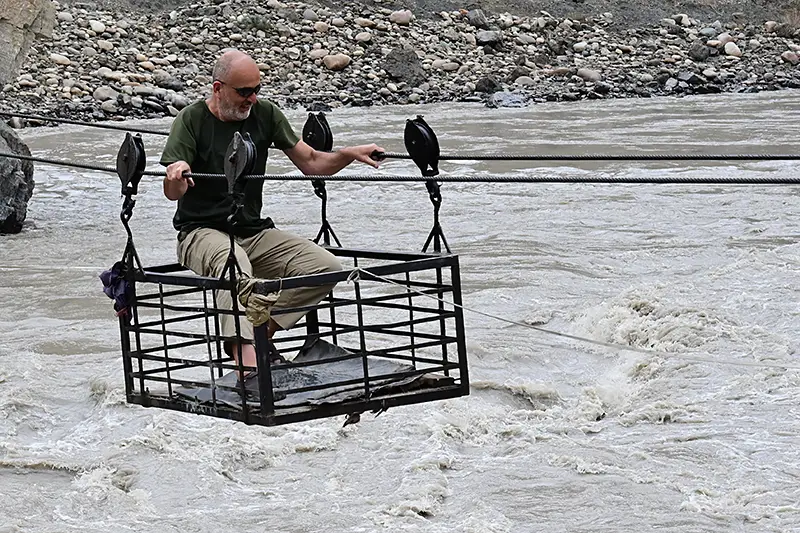
Steve Davey
Steve Davey is a writer and photographer who has travelled the World in the course of his work for more years than he will ever care to admit, researching and photographing for magazines, newspapers and publishers.
Steve is the author of a number of bestselling titles including Unforgettable Places to See Before You Die and Unforgettable Islands to Escape To Before You Die for BBC Books, which between them sold over 300,000 copies and been translated into almost 50 language and special editions.
Steve has also published Around the World in 500 Festivals, and two editions of Footprint Travel Photography - covering everything that you would ever need to know about travelling with a camera.
Steve has been running travel photography tours for twenty years, and has gained unparalleled experience in organising and leading a unique and successful photography tour.
Steve brings all of this experience to his tours and can teach you all of the tips and techniques that a professional travel photographer uses.
More than this though, Steve will enlighten you as to how he approaches both travel and photography. This approach will push engagement and empathy, and will encourage you to experience as much as possible on your trip in order that your pictures can show your individual impression of the place that you are travelling in and the people you encounter.
You can see more about Steve Davey on this link, and more about his vision for his tours on this link.

Intrepid Travel
All of land arrangements and bookings are subcontracted to Intrepid Travel, which means you are fully protected by their comprehensive travel industry bonding.
Intrepid have been running small group adventures for over 37 years, and have a network of offices all over the World. This means that they have huge experience in the countries and the regions that they organise travel to, drawing on the lives and knowledge of the people who actually live there.
On our trips we will be accompanied by one of Intrepid's expert Group Leaders throughout. These are the perfect people to show you a country and work with Steve to help you to get the most out of the trip.
Intrepid Travel are more than just a travel company though. They are dedicated to helping to make the World a better place. They achieved B-Corp status in 2018, and are working to become carbon neutral. They are aiming to be a purpose-led business, driving social and environmental issues above profit.
As a part of this Intrepid formed the Intrepid Foundation, which has distributed over $20 Million since its creation in 2002. This is donated by its travellers, and matched by Intrepid, to help local communities and projects around the World.
Intrepid were one of the first travel companies to ban elephant rides on their tours, as a part of their comprehensive animal welfare policy.
You can see more about Intrepid Travel and what they contribute to my tours on this link.